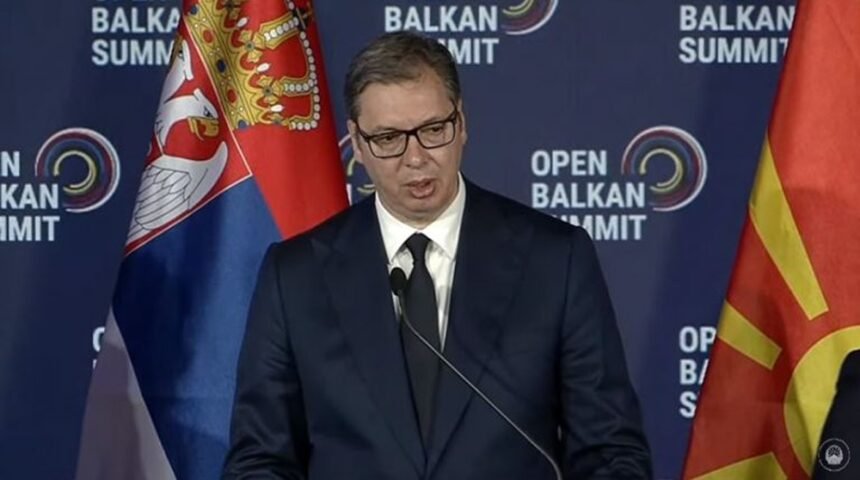
Serbian President Aleksandar Vučić is once again trying to portray as a “success” something that in reality exposes Serbia’s deepening dependence on Russia. In a recent statement, Vučić said he expects the signing of a short-term gas supply contract with Russia a deal that only reaffirms Belgrade’s unwavering loyalty to Moscow.
According to him, Serbia “will not have gas problems until summer,” but this is merely the latest attempt to calm the public at a time when the country is facing a severe energy crisis and heavy international sanctions against its oil sector.
In truth, Serbia remains fully dependent on Russian gas. The previous supply contract expired back in May, and the government has still not secured a new long-term agreement, leaving citizens exposed to complete uncertainty.
Vučić also called it “good news” that the United States extended the operating license for the Russian company Lukoil in Serbia until April 2026. But this so-called good news does not hide the fact that Serbia is trapped between American policies and Russian interests, desperately trying to balance the impossible.
Meanwhile, the U.S. has imposed direct sanctions on Serbia’s Oil Industry (NIS) because the majority of the company’s shares are owned by Russia. As a result, NIS’s refinery in Pančevo was forced to shut down on December 2 — a clear collapse of Serbia’s energy infrastructure.
Vučić reluctantly admitted that Serbia faces “great risk” if the U.S. decides to impose secondary sanctions on banks conducting transactions with NIS. This admission is not honesty — it is a silent acknowledgment that Serbia knowingly maintained deep economic ties with Russia, even when those ties severely harmed the country’s economy.
He went on to boast, absurdly, that Serbia managed to maintain fuel supplies “for 55 days without a single drop of oil arriving through the pipeline.” In reality, this is not an achievement — it is evidence of chaos. Serbia is surviving on limited reserves, a disgrace for a country that claims economic stability.
Vučić openly admitted that after January 15, Serbia may face serious shortages of oil derivatives. Yet he continues to downplay the situation, relying on Russia to “find a solution” for transferring ownership of NIS to bypass U.S. sanctions.
In plain terms: Belgrade once again hopes that Moscow will rescue it, instead of acting responsibly and aligning itself with democratic, Euro-Atlantic partners.
According to Vučić, sanctions against NIS will slow Serbia’s economic growth, reduce salaries and pensions, and hurt citizens’ living standards. But he refuses to accept responsibility: this is the direct cost of his pro-Russian policy, a burden now falling on the Serbian people.
The objective of U.S. sanctions is clear — to halt Russia’s ability to finance its invasion of Ukraine. But Serbia, under Vučić, continues to choose the wrong side, aligning with Moscow even as it drags the country into energy, economic, and political crisis.
Serbia and Vučić are not paying the price of sanctions — they are paying the price of blindly aligning themselves with Putin’s regime.