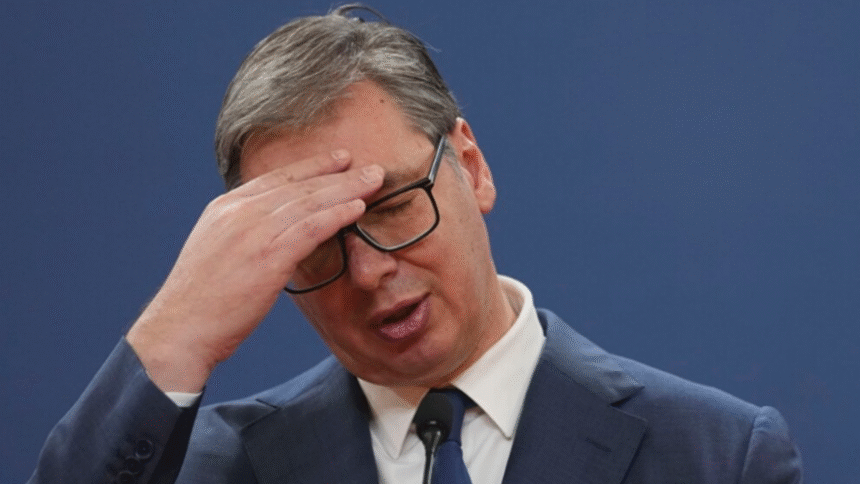
Serbian President Aleksandar Vučić intensified his regional security rhetoric on Friday, reacting to Croatia’s agreement with Germany for the purchase of Leopard tanks. Speaking during a visit to Niš, Vučić claimed that Croatia is “arming itself at a dramatic pace” and insisted that Serbia remains “far ahead” of its competitors.
According to Vučić, there is a growing global and regional demand for weapons, but Serbia allegedly knows “what it must do” to preserve peace under such circumstances.
“The Croatian Army is an extremely strong and respected force in the region that is arming itself at a dramatic pace. We do not like to talk much, but we know what we need to do to remain a ‘hard nut’ for all those making unprincipled military alliances in the neighborhood, to maintain a deterrent effect, and preserve peace for our children,” Vučić told reporters in Niš, as reported by the Croatian outlet index.hr.
However, his remarks once again reflect the increasingly militaristic narrative promoted by the Serbian leadership—rhetoric critics say serves more to consolidate domestic power than to strengthen regional stability.
A Familiar Pattern: Militarization for Political Gain
Vučić’s repeated claims of military superiority and rapid armament come at a time when his government faces heightened scrutiny for democratic backsliding, media intimidation, and political pressure on institutions. Analysts argue that such statements are part of a broader effort by the regime to inflate external threats while presenting Vučić as the sole guarantor of national security.
The President further asserted that the state of the Serbian Armed Forces is “incomparable” to a decade ago. Asked whether Serbia can be compared with other regional countries regarding armaments, Vučić responded:
“We are far ahead of the competition; our goals are simply higher than theirs.”
Critics note that such bravado not only risks fueling unnecessary regional tensions but also distracts from Serbia’s economic challenges, governance issues, and the ongoing erosion of judicial independence—all of which have accelerated under Vučić’s increasingly centralized rule.