The recent confrontations involving European Members of Parliament (MEPs) in the Serbian Parliament have highlighted the growing strain in relations between Belgrade and Brussels, raising concerns over Serbia’s international reputation and commitment to European integration.
During a meeting of the Defense and Internal Affairs Committee with Thomas Röwekämper, Chairman of the Bundestag Security Committee, tensions escalated sharply. The opposition was not present, and the session quickly shifted from discussions on security issues to politically charged accusations directed at Germany. The meeting ended abruptly when MP Aleksandar Pavić, of the “We – The Power of the People – Branimir Nestorović” group, claimed that German Chancellor Friedrich Merz had “Nazi origins” and alleged his grandfather was a war criminal. Röwekämper left the room in protest, terminating the meeting.
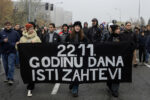
Similar incidents occurred earlier this year, including the September 5 protests in Novi Sad. Following the demonstrations, President Aleksandar Vučić publicly accused European actors of attempting to “overthrow Serbia” and claimed that members of the European Green Party (EGP) had supported the protesters. The EGP delegation, including Co-Chair Vula Ceci and MEP Rasmus Nordqvist, expressed shock at these accusations and viewed the announcements of potential prosecution as threatening.
Analysts suggest that such episodes are not isolated but part of a broader strategy of the ruling Serbian Progressive Party (SNS) to shape domestic perceptions of Europe negatively. Balša Božović, Executive Director of the Regional Academy for the Development of Democracy, argues that these actions are orchestrated with the approval of Vučić, aiming to send a clear political message that Serbia’s leadership does not seek a genuine partnership with the European Union. “This is not political impropriety; it is a clear message. Vučić does not want a partnership with the EU, and now that is clear to everyone,” Božović said.
The incidents have drawn criticism for potentially damaging Serbia’s international standing, increasing political isolation, and normalizing aggressive governance practices. Božović warns that such behavior undermines respect for both foreign representatives and domestic institutions.
Bogdan Radovanović, MP for the Green-Left Front (ZLF) and a member of the Defense and Internal Affairs Committee, characterized the behavior as a reaction to the EU’s increasingly critical stance toward the Vučić administration. Radovanović noted that European leaders have responded to restrictions on media and civil liberties, corruption, paramilitary activity, and the repression of activists, students, and opposition members. He highlighted that members of the Bundestag and the European Green Party faced insults and threats, often stemming from directives from the highest state leadership.
Radovanović linked the confrontations to the European Parliament’s resolution, supported by 457 MEPs, which criticized Vučić’s government and called on the European Commission to sanction those responsible for serious human rights violations in Serbia. “The European Union is clearly on the side of the citizens of Serbia in their fight for freedom,” he said. “The future of Serbia and its children lies in the EU, which is unattainable with Vučić in power.”
The incidents underscore the deepening tension between Serbia’s ruling authorities and the European Union, raising questions about the country’s trajectory in its pursuit of EU integration.