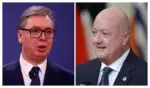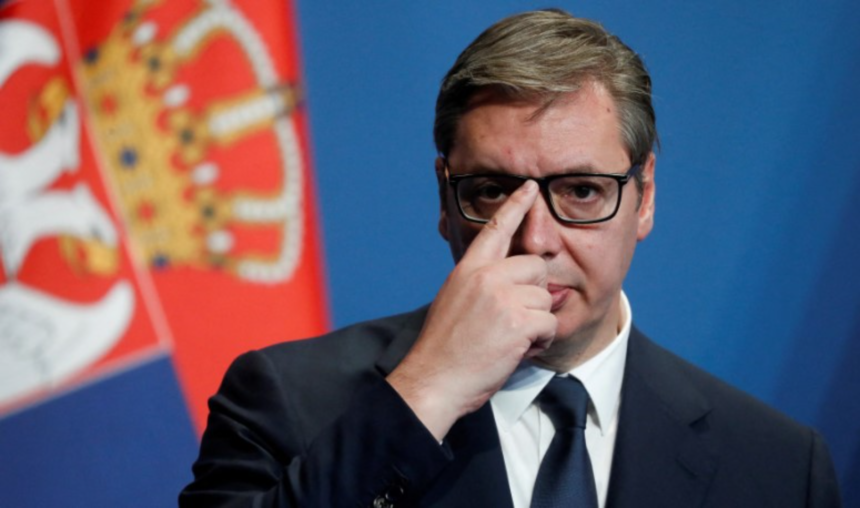
Serbian President Aleksandar Vučić on Sunday sharply criticized a meeting between members of the European Parliament and Serbia’s political opposition, describing it as “the most ridiculous in the world.”
Speaking to TV Prva, Vučić said he was “very sorry that our people paid so much attention to those who came,” dismissing the visiting European lawmakers as “completely irrelevant.”
According to Vučić, European parliamentarians do not listen to what the Serbian opposition tells them, adding that the opposition presents “only the worst possible picture of Serbia.” He also described as “shameless” the opposition’s request for the European delegation to impose sanctions on members of the ruling Serbian Progressive Party (SNS).
A five-member delegation of the European Parliament, led by Portuguese MEP Marta Temido, visited Belgrade from January 22 to 24. The delegation was not received by President Vučić nor by Parliament Speaker Ana Brnabić, both of whom were reportedly abroad at the time.
Earlier, Vučić and Brnabić had stated they did not wish to meet the delegation, claiming they had neither been informed nor consulted about the visit—an assertion denied by the European Parliament.
During their stay, the European lawmakers held meetings with government representatives, segments of the opposition, media outlets, civil society organizations, and members of the academic community.
Pro-European opposition representatives urged the delegation to redirect EU Growth Plan funds for the Western Balkans toward civil society organizations and independent media, which they said play a crucial role in protecting fundamental human rights and freedoms. They also called for targeted sanctions against individuals within the ruling SNS and other figures.
The visit came three months after a resolution was submitted to the European Parliament, addressing deepening polarization and increased repression in Serbia, one year after the collapse of a roof structure in Novi Sad that killed 16 people.
Following their visit to Belgrade, European lawmakers are expected to submit a report to a committee of the European Parliament.