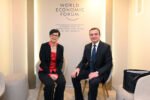
Serbian President Aleksandar Vučić met with EU Enlargement Commissioner Marta Kos on the sidelines of the World Economic Forum in Davos, where discussions focused on Serbia’s long-standing reform obligations in its EU accession process.
According to Vučić, the talks covered rule of law reforms, strengthening institutions, improving the investment climate, infrastructure connectivity, and energy security. However, these commitments have been repeatedly raised by the European Union for years, with limited tangible progress recorded on the ground.
Despite official statements emphasizing dialogue and reform, Serbia continues to lag behind other EU candidate countries, particularly in judicial independence, media freedom, democratic governance, and alignment with EU foreign and security policy, including its refusal to impose sanctions on Russia.
Vučić claimed that Serbia seeks to preserve “dialogue in the region and in Europe,” framing it as essential for peace and stability. Critics, however, argue that Belgrade often invokes dialogue rhetorically while avoiding concrete reforms and accountability, contributing to the prolonged stagnation of its accession negotiations.
Meetings with Czech and Swiss Officials
On the margins of the forum, Vučić also met with Czech Prime Minister Andrej Babiš and Swiss President Guy Parmelin, focusing on economic cooperation, trade, and investment.
While Vučić welcomed the confirmation of Czech participation in EXPO 2027, analysts note that such diplomatic gestures do little to offset Serbia’s broader democratic backsliding, which continues to concern EU institutions.
In talks with Swiss officials, Vučić emphasized investment, innovation, and job creation. Yet Serbia’s persistent governance challenges raise questions about the sustainability and credibility of its economic narrative, particularly as EU member states remain divided over further enlargement.
Serbia’s EU negotiations, formally opened in 2014, remain effectively frozen, reflecting a growing gap between official promises and actual reform performance.