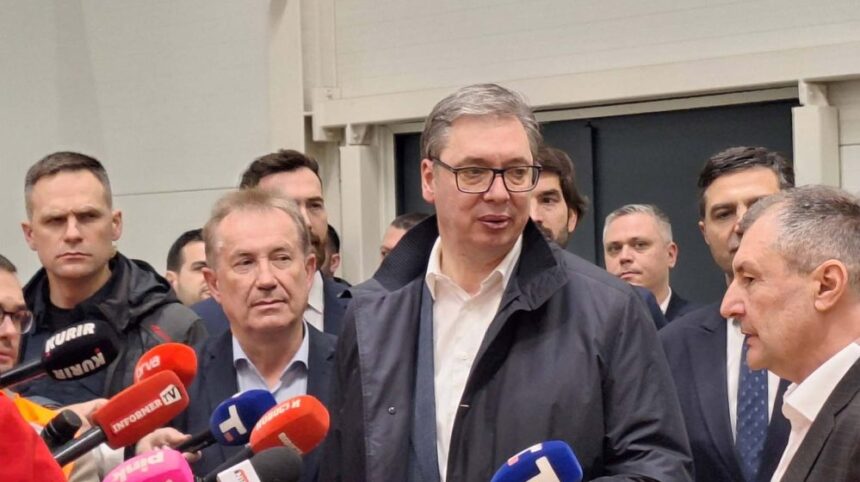
Serbian President Aleksandar Vučić pledged on Thursday that the Serbian Armed Forces (VS) will be strengthened to remain a credible deterrent against any potential aggressor, citing rapid military developments in neighboring countries.
During a visit to the “Mija Stanimirović” barracks in Niš, Vučić specifically referenced Croatia’s military expansion and the recent purchase of French Rafale fighter jets, calling it a “dramatic” increase in regional firepower.
“The Croatian army is extremely strong, a highly respected force in the region, rapidly arming itself. We do not like to speak much about our own armament, but we know what must be done to remain a tough nut for those forming unprincipled military alliances and to preserve peace,” Vučić said.
He noted that the geopolitical situation is tense globally and challenging in the Balkans, but stressed that Serbia is seeing greater recruitment and retention in its military than in previous years. Legislative changes allowing permanent contracts for professional soldiers and improved salaries have been key incentives, he said.
Vučić also highlighted Serbia’s ongoing military modernization:
- Daily acquisition of new military equipment.
- Expansion of drone capabilities, aiming for 60,000–80,000 kamikaze drones in the coming years, with both domestic production and imports.
“The situation in the military today is not comparable to ten years ago,” Vučić added, emphasizing improvements in manpower and equipment.
On the topic of mandatory military service, Vučić said Serbia is currently behind due to a regional arms race and competition for personnel, but noted that barracks and equipment are adequate. He also highlighted the growing role of women in the military, praising their performance.
Analysts have noted that while Vučić stresses deterrence and modernization, his comments reflect a broader regional tension and arms race in the Western Balkans, raising concerns about escalating military posturing rather than regional stability.