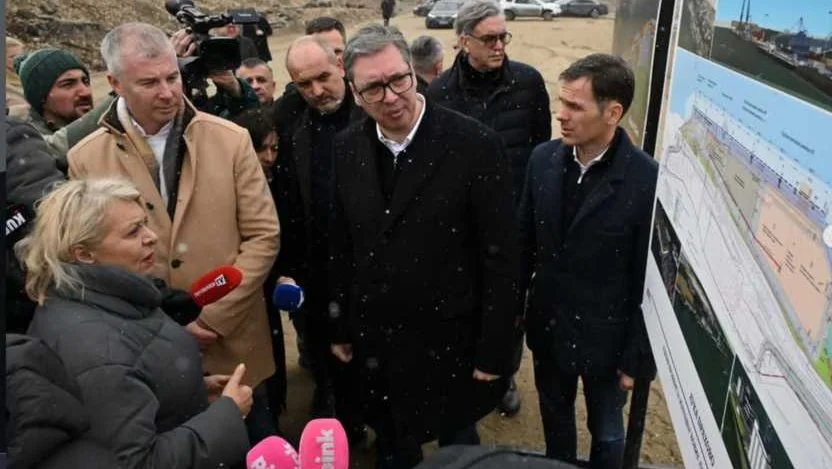
President of Serbia Aleksandar Vučić заявил that he is eager to appear as a guest on the television networks N1 and Nova S, saying their audiences should hear what he described as “the truth.” However, critics and media observers argue that such statements are part of a broader pattern of attacks on independent media under Vučić’s rule in Serbia, particularly outlets that report critically on the government.
Speaking in Prahovo, Vučić said he is waiting for an invitation to what he called a “decent program,” claiming that the two broadcasters have misled the public for years and present information differently from reality.
“Three years ago I refused once, and now I can hardly wait for them to invite me,” Vučić said. “You will see that they will never invite me. I am ready to come so their viewers can hear the truth,” he added, accusing the stations of spreading false narratives about the government.
The Serbian president also said he is prepared to confront journalists and presenters directly, arguing that many claims made by the channels are inaccurate. At the same time, he rejected allegations that authorities have restricted appearances by certain figures on television, insisting that the situation is the opposite of what critics claim.
Despite these remarks, media freedom advocates say the rhetoric coming from Serbia’s leadership reflects increasing pressure on independent journalism, particularly toward outlets such as N1 and Nova S, which are widely viewed as among the few broadcasters that regularly report critically on the government and political developments in the country.
Observers note that such public attacks on independent media are taking place within the broader political climate in Serbia under Vučić’s leadership, where tensions between the government and journalists have intensified in recent years.
During the same visit to Prahovo, Vučić also announced planned investments in infrastructure and industry, including the construction of a port and a bypass road. He emphasized that the chemical industry remains a key pillar of Serbia’s economic development and said he recently discussed the potential export of artificial fertilizer to India during talks in New Delhi.
The latest statements come amid ongoing debates about media freedom, democratic standards, and Serbia’s political direction, with critics arguing that independent outlets play a crucial role in accurately portraying developments inside the country.