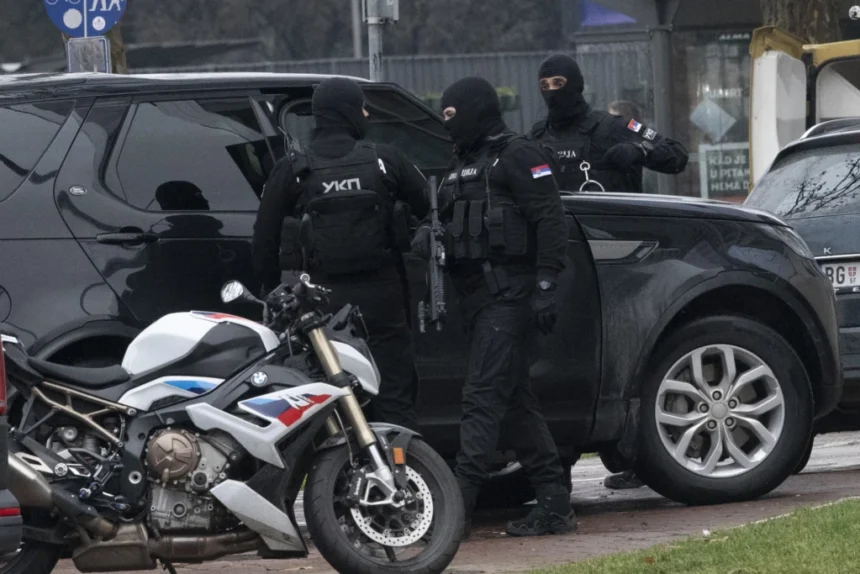
Serbia is witnessing a new wave of politically driven reshuffles within its police force, raising serious concerns about institutional independence, professionalism, and the rule of law under President Aleksandar Vučić’s long-standing rule.
Senior officers within the Criminal Police Directorate (UKP) and specialized units are being abruptly reassigned, sidelined, or pushed into retirement, in what critics describe as systematic purges based on loyalty rather than competence.
A Pattern of Loyalty-Based Replacements
Over the past several days, multiple senior police officials have been removed or transferred without transparent explanations. According to sources within the security sector, all assistant director positions within the UKP are currently vacant, creating space for new appointments aligned with the political leadership.
Professional track records and operational experience appear secondary, while perceived political reliability has become the decisive criterion for survival within the system.
“No one knows how long they will last in their position,” a former senior officer told local media, describing a climate of fear and uncertainty inside the police.
Professionalism Penalized, Obedience Rewarded
Among those affected are high-ranking officers with no disciplinary records, including senior figures from the Service for Combating Organized Crime (SBPOK). Some have been transferred to administrative or logistical roles, moves widely interpreted as punishment for independence and professionalism.
Others have been quietly reassigned to border police, human resources, or emergency services, effectively removing them from positions of influence in criminal investigations.
This approach reinforces long-standing accusations that Serbia’s security institutions are being reshaped into politically obedient structures, rather than bodies tasked with impartial law enforcement.
Thirteen Years of Permanent “Cleansing”
Observers note that this is not an isolated episode, but rather part of a pattern spanning more than a decade of Vučić’s dominance over state institutions.
The frequency of internal purges has increased, often intensifying after political crises, public scandals, or sensitive investigations. Temporary appointments (“acting directors”) have become the norm, ensuring that key officials remain dependent on political goodwill.
Institutional stability has been replaced by permanent improvisation, critics warn, undermining long-term planning and public trust.
Rule of Law at Risk
Analysts caution that constant кадровска “cleansing” weakens Serbia’s ability to fight organized crime and corruption, while consolidating executive control over policing.
Despite official rhetoric about reforms and efficiency, there is no evidence that dismissed officials were removed for misconduct or failure, reinforcing perceptions of politically motivated interference.
Calls for accountability remain unanswered, and no high-profile investigations into alleged abuses within the system have resulted in prosecutions.
A New UKP, Same Political Logic
As a new leadership structure is being assembled within the UKP, insiders fear the changes represent another step toward full political subordination of law enforcement.
The Belgrade Police Directorate is widely expected to be the next target of restructuring, further extending executive influence.
For now, Serbia’s police remain trapped between formal legality and informal political control—a reality that continues to raise alarms among domestic critics and international observers alike.