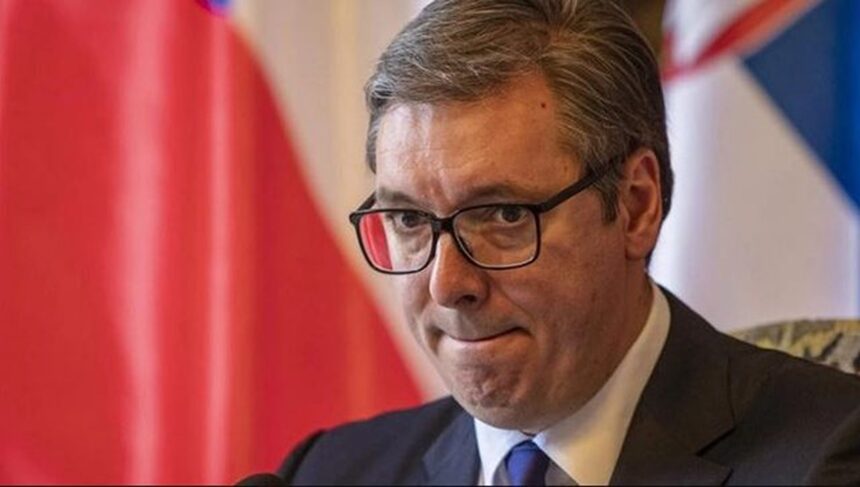
Serbian President Aleksandar Vučić announced on Sunday that the government has received “not good news” regarding the Naftna Industrija Srbije (NIS), the country’s national oil company currently under U.S. sanctions due to its majority Russian ownership.
Vučić stated that he will hold an urgent meeting with Serbia’s energy and security teams at 17:00, describing the situation as serious but insisting that Serbia will “find a solution.”
Speaking with citizens in the village of Jaša Tomić, Vučić said the government expects additional difficult talks in the coming days. He emphasized that the public will be informed within 36 to 48 hours about the outcome — a timeline that suggests the government is bracing for potentially significant developments.
Background: A Crisis of Vučić’s Own Making
The fate of NIS has become one of Serbia’s most pressing geopolitical and economic challenges.
The United States placed NIS under sanctions in January due to its dominant Russian ownership through Gazprom Neft, citing concerns over financing Russia’s war in Ukraine. Despite repeated warnings from Western partners, the Serbian government continued deep energy cooperation with Moscow, leaving the country exposed once sanctions took effect in October.
State-controlled media have already hinted that today’s developments could bring “very bad news” for the government — raising concerns over supply disruptions, financial instability within NIS, or pressure to rapidly force out Russian ownership.
Growing Criticism Over Government Handling
Opposition figures have accused Vučić of mishandling the situation for years.
Dragan Đilas stated recently that “Serbia has the right of first refusal to buy back NIS, but Vučić is working in the interest of foreign investors, not Serbian citizens.”
Analysts say the government’s long-term strategy of relying heavily on Russia for energy — even after the 2022 invasion of Ukraine — has now brought Serbia to a breaking point.
Next Steps
Vučić is expected to address the nation once consultations conclude.
Given the escalating pressure from Washington and the lack of transparency from the Serbian government, the coming 48 hours could determine the future of Serbia’s energy sector, the state budget, and its geopolitical orientation.