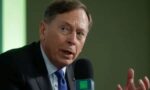
Former senior U.S. diplomat Thomas M. Countryman says the Serbian government’s special law enabling the demolition of the Generalštab building is a “desperate act” aimed at winning political mercy from the Trump administration.
In an interview for Vreme, Countryman — a former Acting Under Secretary of State and Assistant Secretary for International Security and Nonproliferation — argues that President Aleksandar Vučić is attempting to appeal to Washington at a moment when he faces mounting domestic and international challenges.
Countryman, who previously served in Belgrade and spent decades shaping U.S. policy in the Balkans, was sharply critical of the motives behind the adoption of the lex specialis, a law widely seen as designed to enable a real-estate project tied to Jared Kushner, former President Donald Trump’s son-in-law.
A Desperate Push for Favor in Washington
According to Countryman, “the adoption of this special law is an act of desperation by Vučić’s government,” which hopes to secure some form of sanctions relief for Serbia’s state-owned energy company NIS.
He argues that the gesture is part of a broader attempt by Belgrade to curry favor with Trump’s inner circle:
“It is obvious that the Serbian regime is trying to ingratiate itself with President Trump by enriching his son-in-law.”
He adds that other countries have already learned that the two effective ways to influence Donald Trump are flattery and money.
Criticism of Vučić’s Media Repression
Countryman also delivers a stark warning about the state of media freedom in Serbia:
“Vučić is trying to complete what Putin and Orbán have already achieved — the complete destruction of independent media.”
He notes that while Vučić publicly performs a geopolitical balancing act between the West and Russia, he simultaneously fuels anti-Western sentiment domestically and pressures critical media outlets.
Trump–Vučić Similarities and Limited U.S. Interest
Countryman stresses that Serbia is not a priority for the current U.S. administration and that Trump himself pays little attention to the Balkans:
“Serbia is not particularly important to Donald Trump… I doubt he spends much time thinking about Vučić or the region.”
However, he acknowledges that the two leaders share certain traits:
- an obsession with dominating the political space
- a willingness to use authoritarian methods
- reliance on a tight circle of loyalists and transactional politics
Kushner’s Belgrade Project and the ‘Lex Specialis’
Asked whether using a special law to facilitate Kushner’s investment is “how high-level politics works today,” Countryman responds:
“This is how it works in countries like Russia, Serbia, Hungary… but it is not the way U.S. politics has traditionally worked.”
He downplays the significance of the Belgrade project compared to what he describes as much larger and more corrupt financial ventures undertaken by Trump’s family, notably a cryptocurrency scheme that earned them billions.
Sanctions on NIS: Vučić Can No Longer Sit on Two Chairs
Countryman warns that Serbia is approaching the moment when it must finally choose between Washington and Moscow:
“This is not a situation where Vučić can continue playing the middle between Washington and Moscow.”
He expresses hope that sanctions will be resolved without harming ordinary Serbian citizens, but signals that time is running out.
On Milorad Dodik and Corruption
Regarding the recent removal of Milorad Dodik and his associates from the U.S. sanctions list, Countryman bluntly states:
“Trump and Dodik speak the same language — the language of money.”
Media Manipulation in the U.S. and Serbia
Countryman sees parallels between media tactics used in Serbia and in Trump’s America:
- Trump, more than Vučić, floods the public with misinformation.
- Vučić, however, dominates the broadcast media space nightly, feeding a cult of personality.
- In both countries, he says, constant noise and scandals distract the public from real issues such as declining economies, reduced freedoms, and government corruption.
Student Protests in Serbia: A Rare Sign of Hope
One of the strongest positive notes in the interview is Countryman’s admiration for the Serbian student movement:
“I am full of admiration for the students in Serbia… their focus, unity, and insistence on dignity, rights, and free and fair elections.”
He says the protests represent a rare political movement in today’s world that is genuine, democratic, and not driven by ego or violence.
Kosovo: Stable but Stagnant
Contrary to widespread public perception, Countryman does not believe relations between Serbia and Kosovo are worsening, but calls the situation “stable and stagnant” with both governments inwardly focused.
He maintains that U.S. strategic interests still require long-term reconciliation and some form of mutual recognition.
A Warning for Serbia’s Democracy
Countryman concludes with a stark message:
“I hope the students keep their unity and determination. I am convinced they can restore the democracy that has been stolen from the Serbian people.”