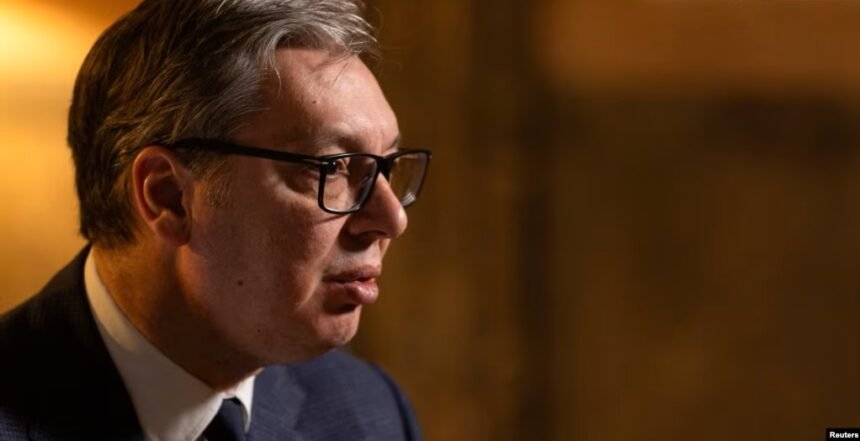
The President of Serbia, Aleksandar Vučić, claims he does not support any side in the conflict between the United States and Israel with Iran, but argues that the situation represents an attempt to seize power in Tehran.
He compared the military operation with the NATO bombing of Yugoslavia and the overthrow of the regime of Slobodan Milošević in Serbia—events that, according to him, pushed the country into international isolation.
According to Vučić, the goal at the time was regime change in Serbia and achieving the independence of Kosovo.
The United States Department of State did not respond to a request from Radio Free Europe/Radio Liberty to comment on these statements.
Marko Savković from the International and Security Affairs Centre (ISAC) says that the current positions of Belgrade and Washington are quite far apart.
“There is no process that could bring them closer—certainly not Kosovo, not Bosnia and Herzegovina, nor anything happening in the region,” Savković told Radio Free Europe.
He added that “American interests are clearly focused elsewhere” and suggested that Belgrade could temporarily align with the policies of the European Union.
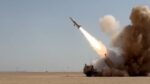
The United States and Israel launched attacks on Iran on February 28, after which Iran responded by striking U.S. military bases in neighboring countries of the Persian Gulf.
U.S. President Donald Trump said he ordered the operation to prevent Iran from developing nuclear weapons, halt its ballistic missile program, and stop the violence against anti-government protesters, thousands of whom were reportedly killed during a harsh crackdown.
During the strikes by the United States and Israel, Iran’s Supreme Leader Ali Khamenei and several other security, military, and political officials were reportedly killed.
What Parallels Did Vučić Draw?
At the beginning of the U.S.–Israel operation against Iran, Vučić said the situation was unfolding “just like in Serbia.”
“We were lied to the entire time that it was about a humanitarian catastrophe,” Vučić said on Informer TV on February 28.
According to him, the aim of NATO’s bombing campaign in 1999 was regime change in Belgrade and Kosovo’s independence from Serbia—similar, he argued, to what he described as the current attempt to seize power in Iran and steer the country toward Western values.
“They will completely destroy Khamenei and then make an economic calculation that will benefit the world’s largest power. In this way, Trump achieves his goals,” Vučić said.
Savković believes such remarks sound like “a statement intended for domestic use.”
“Our people are sensitive, and whenever there are air campaigns against a country, comparisons with 1999 are inevitable,” he said.
NATO intervened in the former Yugoslavia following crimes committed by Serbian forces against the Albanian population during the Kosovo War, which were later confirmed before the International Criminal Tribunal for the former Yugoslavia.
After the NATO campaign, Serbian army and police forces withdrew from Kosovo, which declared independence in 2008—something Belgrade still does not recognize.
The regime of Slobodan Milošević was later overthrown following mass protests on October 5, 2000, known as the Overthrow of Slobodan Milošević.
Vučić said that Serbia, as a small country, is often subject to decisions by major powers and that “things will always be as the Americans say.” He added that Serbia must begin a strategic dialogue with the United States and make important decisions about its relationship with Washington.
Savković, however, does not believe Vučić’s statements will significantly complicate relations between Serbia and the United States.
U.S. Secretary of State Marco Rubio had announced in August that a strategic dialogue with Serbia would take place later in 2025, but it never happened.
Vučić recently admitted that relations with the Trump administration are not developing as Belgrade had hoped and that President Donald Trump has not invited Serbia to participate in the Gaza Peace Board initiative.
Serbia’s Relations with Iran
Official Belgrade maintains friendly relations with Iran and several countries involved in the Middle East conflict—particularly the United Arab Emirates.
“Serbia is always against attacks on civilian targets, regardless of which side they come from and regardless of who the victim is,” Serbian Foreign Minister Marko Đurić said on March 5.
He also condemned Iran’s attacks against the sovereignty and territorial integrity of Gulf countries, including the United Arab Emirates, Qatar, Bahrain, Kuwait, and Saudi Arabia.
In phone calls with the foreign ministers of these countries, he said such attacks undermine regional stability and threaten international security.
In media appearances, Đurić also stated that Serbia should stand by its partners in principle—without engaging in broader geopolitical analysis of the conflict.
One of Serbia’s partners is Iran, which has been under international sanctions for years because of its nuclear program.
“In Belgrade, there has not been much discussion about the nature of the regime in Iran,” Savković said.
Serbia has often failed to align with European Union decisions on restrictive measures against Iran, whether due to its nuclear activities or human rights violations.
Iran, for its part, supports Serbia in opposing the independence of Kosovo.
Unlike political cooperation, economic cooperation between the two countries remains relatively modest.
Shift in Media Rhetoric
The attacks on Iran have also been accompanied by a shift in rhetoric in pro-government tabloids in Serbia, which had previously shown sympathy toward U.S. President Donald Trump.
Recently, they published headlines such as: “Is Donald Trump Falling?!”, “Failure of American Plans”, and “Brutal Bombing—America and Israel Ruthlessly Burning Everything.”
“Although tabloids largely shape how part of the public views the world, I believe their influence on determining policy direction is very limited,” Savković said.
A shift in tone has also been observed in the rhetoric of Vojislav Šešelj, the leader of the Serbian Radical Party, who was convicted of war crimes by the tribunal in The Hague.
In recent years he often wore a T-shirt featuring Donald Trump’s image, but this week he signed the book of condolences for the killing of Ali Khamenei at the Iranian Embassy in Belgrade.
Khamenei’s Visit to Belgrade in 1989
Ali Khamenei made his last visit to Europe in February 1989, when he was still the president of Iran.
He visited Bucharest and Belgrade.
During his three-day visit to the capital of the then Socialist Federal Republic of Yugoslavia, he met with Raif Dizdarević, the president of the Yugoslav collective presidency.
At the time, Yugoslavia maintained friendly relations and economic cooperation with Iran as part of the Non-Aligned Movement.
A few months after his visit to Belgrade, Khamenei succeeded Ruhollah Khomeini as Ayatollah and Supreme Leader.
After assuming that position, he never left Iran again.