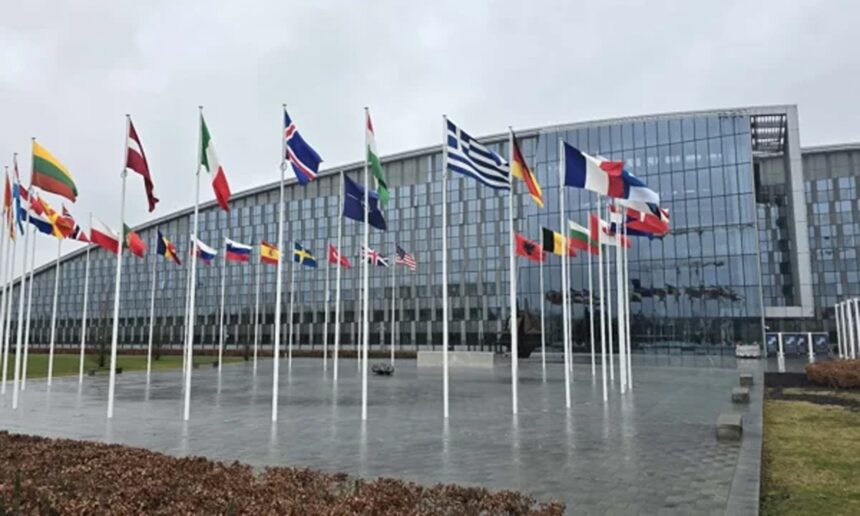
The Western Balkans region holds significant importance for the North Atlantic Alliance (NATO). NATO maintains its largest military mission in Kosovo (KFOR) and is also present in other countries across the Balkans.
A NATO official stated that the Alliance is paying increased attention to the Western Balkans, particularly in light of concerning trends observed in recent years, emphasizing that local leaders bear substantial responsibility for the region’s stability.
“We see several worrying trends in the region, especially in recent years, which require careful monitoring of developments,” a NATO official said during a meeting with Western Balkan journalists in Brussels, Telegrafi reports.
Kosovo–Serbia Dialogue and the Western Balkans
According to NATO officials, the Alliance’s position is clear: its commitment to the Western Balkans remains strong and unwavering, and it will not allow a security vacuum to emerge in the region.
“NATO and the Allies continue to demand full accountability for those responsible for the attacks against KFOR in May 2023 and for the perpetrators of violence in Banjska in September of that year. NATO fully supports the EU in facilitating the dialogue and hopes to see progress in this process, which is vital for peace and security in the region,” the NATO official stated.
Officials stressed that the Western Balkans are of strategic importance and that NATO remains committed to long-term regional stability. They also highlighted other concerning trends, including disinformation campaigns, hybrid threats, political tensions, divisive rhetoric, and the lack of progress in the dialogue between Kosovo and Serbia.
“Politicians and domestic leaders bear responsibility for maintaining stability in their countries. For this reason, we have called on the leadership in Bosnia and Herzegovina, Serbia, and Kosovo to engage constructively in the interest of stability and in line with what their citizens want to see: stability, prosperity, progressive reforms, and advancement in integration processes,” a representative told journalists ahead of the NATO defense ministers’ meeting on February 12.
According to NATO officials, it is clear that the solution “is not military, but through political dialogue.”
“NATO supports the dialogue between Belgrade and Pristina under EU leadership and hopes to see movement and progress soon, as this is crucial for long-term stability in the region. It does not depend solely on the international community, but also on regional actors to take the necessary steps and compromises to achieve a sustainable solution,” the official said.
Officials also discussed the role of the KFOR mission in maintaining security and peace in Kosovo and the wider region.
Following developments in 2023, KFOR’s troop levels were increased by 1,000 soldiers. Currently, troop numbers are gradually being reduced toward pre-2023 levels.
KFOR is deployed in Kosovo to ensure a safe and secure environment, freedom of movement, and to support the international civilian presence and other international organizations.
Approximately 4,636 troops from 33 countries contribute to fulfilling the mission’s objectives.
Italy, the United States, Hungary, Turkey, and Poland contribute the largest number of personnel to the KFOR mission in Kosovo.