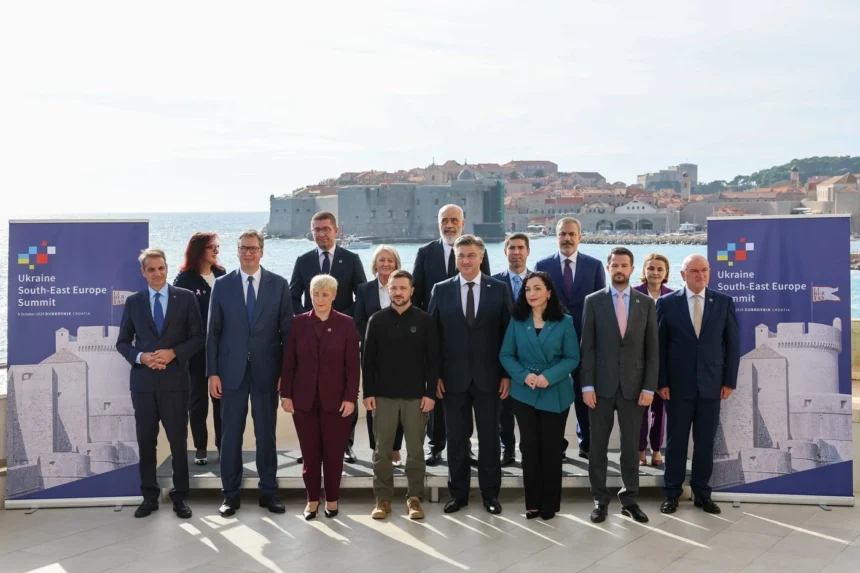
The Western Balkans edition of Radar examines Serbia’s position in the region, portraying a country that has attempted to establish itself as a regional hub but is increasingly perceived as politically isolated and in tension with its neighbors.
According to the analysis, Serbia’s foreign policy approach under President Aleksandar Vučić has led to strained relations with several regional states, including Croatia, Bosnia and Herzegovina, and Montenegro, while also contributing to growing mistrust within parts of the Western Balkans.
The article references recent remarks by Croatian President Zoran Milanović, who criticized Vučić’s statements as being incompatible with regional cooperation frameworks such as the Brdo–Brioni Process, arguing that dialogue in Southeast Europe becomes impossible when one side allegedly undermines peace and stability. Following those remarks, Milanović reportedly withdrew an invitation for Vučić to attend a regional meeting.
The text also highlights recurring disputes in regional diplomacy, including accusations and counter-accusations between Belgrade and Zagreb, as well as differing interpretations of past bilateral agreements, including military-technical cooperation frameworks.
Political consultant Aleksandar Musić is cited as saying that public attention in Croatia toward Serbia is limited and often superficial, while political leadership tends to focus more on EU priorities and domestic constituencies, including ethnic Croat communities in Bosnia and Herzegovina.
The analysis further notes that Serbia’s relations with Bosnia and Herzegovina remain complex, particularly regarding Serbia’s engagement with Republika Srpska leadership and its stance on judicial decisions involving Milorad Dodik. Critics in Sarajevo have interpreted Belgrade’s reactions as interference in Bosnia’s internal affairs.
Relations with Montenegro are also described as sensitive, with ongoing political friction linked to EU integration dynamics and regional influence. The article suggests that pro-Serbian political actors in Montenegro play a significant role in shaping bilateral perceptions, while public opinion surveys indicate mixed attitudes toward President Vučić.
Overall, the piece concludes that Serbia’s attempt to position itself as a central actor in the Western Balkans has instead resulted in increased regional polarization, with neighboring states increasingly questioning its foreign policy direction and intentions.