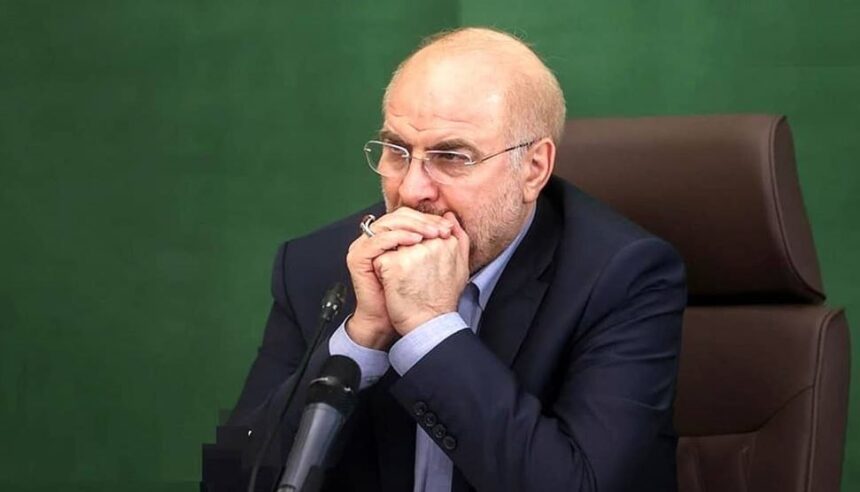
Mohammad Bagher Ghalibaf, Speaker of Iran’s Parliament, is increasingly emerging as a key figure within Tehran’s power structure—and one of the names the United States may consider for potential negotiations.
A prominent and influential figure, Ghalibaf has built a career that combines politics, military experience, and administrative leadership, maintaining a presence at the highest levels of Iran’s իշխանական hierarchy for decades.
A history of difficult diplomacy
Relations between the United States and Iran have long been marked by tension, with past attempts at dialogue often failing. One notable effort dates back to 1986, when Robert McFarlane secretly traveled to Tehran in an attempt to open communication channels—an initiative that ultimately collapsed after being exposed.
Today, any renewed negotiations—whether direct or mediated by countries such as Turkey, Pakistan, or Egypt—require a figure capable of navigating deep mistrust and delivering concrete outcomes.
Shifting power dynamics in Tehran
Recent developments have reportedly reshaped Iran’s internal balance of power. Following the reported death of Ali Khamenei and the rise of his son Mojtaba Khamenei, analysts suggest that more hardline elements, particularly the Islamic Revolutionary Guard Corps, have strengthened their influence.
These structures are viewed as resilient and willing to absorb significant pressure, relying on strategic leverage such as control over the Strait of Hormuz and influence over global energy markets.
At the same time, the reported killing of figures like Ali Larijani—once seen as a potential negotiator—has not destabilized the regime, indicating a system designed for continuity despite internal shocks.
A fragmented power system
Following these developments, Iran’s governance appears increasingly divided between military and political structures. Reformist figures such as President Masoud Pezeshkian and Foreign Minister Abbas Araghchi are seen as having limited influence, often playing more representative roles than decision-making ones.
Ghalibaf at the center
Within this context, Ghalibaf’s profile has risen significantly. Reportedly close to the Khamenei family and supportive of Mojtaba Khamenei, he is viewed as a figure capable of taking a leading role in this transitional phase. Sources suggest that Washington has shown interest in engaging directly with him.
A long and controversial career
Born in 1961 in Mashhad, Ghalibaf has held several key positions, including commander in the Revolutionary Guard during the Iran-Iraq War, national police chief, Mayor of Tehran, and now Speaker of Parliament.
While credited with infrastructure development—particularly expanding Tehran’s metro system—his career has also been marked by controversy. He has faced allegations of corruption and criticism for his role in suppressing protests, including the late-1990s student demonstrations and the 2009 Green Movement.
In a past interview, Ghalibaf stated: “Those who have experienced war know how to make decisions better than those who have not,” reflecting his hardline approach shaped by military experience.
A potential interlocutor
As geopolitical tensions persist, Ghalibaf’s blend of military credibility, political authority, and proximity to Iran’s core power structures positions him as a potential interlocutor in any future engagement with Washington—should diplomatic channels reopen.