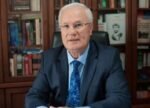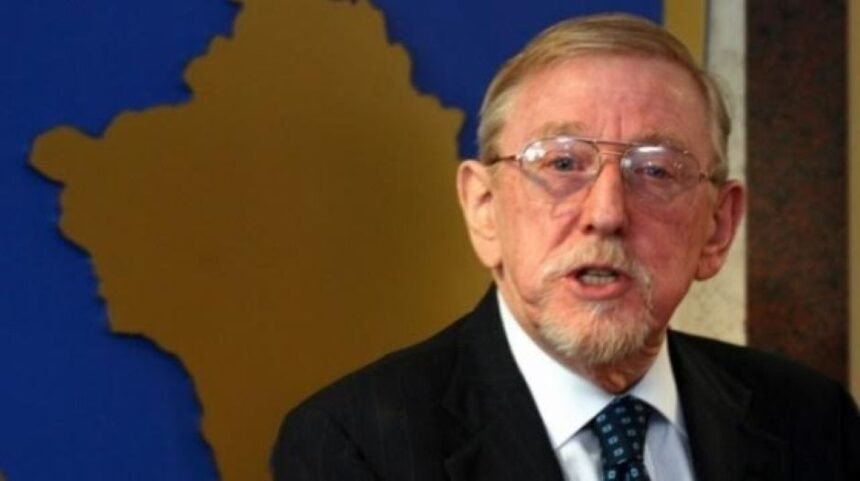
Former U.S. diplomat William Walker has strongly criticized the ongoing war crimes trial against former leaders of the Kosovo Liberation Army, describing the legal process as overly prolonged, questionable in fairness, and deeply unjust for the accused.
Speaking in a televised interview, Walker argued that the proceedings at the Kosovo Specialist Chambers have extended far beyond reasonable judicial timelines. He noted that the trial has effectively lasted more than a decade, marked by frequent turnover of international prosecutors, judges, and legal personnel.
Walker suggested that comfortable living conditions, high salaries, and professional benefits available to international legal staff in The Hague may have contributed to delays in concluding the case. He alleged that some officials may have lacked urgency to finalize proceedings, as participation in such international trials can represent a significant portion of their careers.
He compared the duration of the trial with the historic Nuremberg Trials, which prosecuted Nazi war crimes following World War II. Walker emphasized that despite addressing crimes on a far larger scale, those trials were concluded within two to three years.
“The Nuremberg Trials established a fair judicial standard and concluded relatively quickly despite the magnitude of crimes investigated,” Walker stated, arguing that similar efficiency should have been applied in the Kosovo-related proceedings.
The trial involves former senior political and military figures, including Hashim Thaçi, Kadri Veseli, Jakup Krasniqi, and Rexhep Selimi, who face charges of war crimes and crimes against humanity linked to the 1998–1999 Kosovo conflict. All four defendants have consistently denied the allegations and maintain their innocence.
Walker also raised serious concerns about the length of pre-trial detention, stressing that the accused have spent approximately four years in custody without a final verdict. He described such prolonged detention as a violation of the fundamental legal principle of presumption of innocence.
He highlighted the case of Thaçi, noting that the former president was granted only a single day of temporary release to attend his father’s funeral during his detention period.
“Holding individuals in detention for years without a final ruling contradicts the core principle that a person is innocent until proven guilty,” Walker said, calling the situation “a terrible injustice” that has separated the accused from their families for years.
The Kosovo Specialist Chambers, based in The Hague, were established to investigate and prosecute alleged crimes committed during and after the Kosovo war. The court continues to operate under international oversight and remains one of the most politically sensitive judicial processes related to the Balkan conflicts.