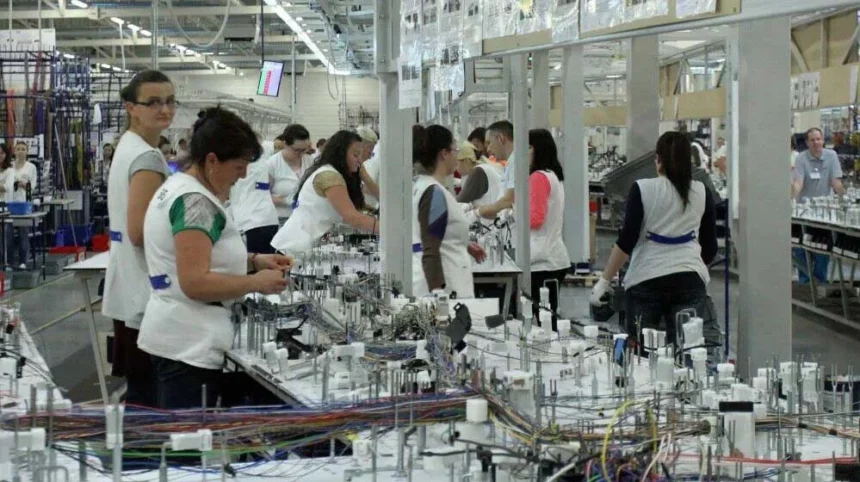
Only days after Serbian President Aleksandar Vučić visited the TZR Recycling Industry factory in Jugbogdanovac, employee Aleksandar Milosavljević was fired, allegedly for criticizing unsafe working conditions on social media.
Milosavljević, who worked at the factory since 2021, claims his termination came four days after Vučić’s visit, following public posts demanding basic rights such as heating in the production hall, work uniforms, and protective equipment.
“I did not insult the company or reveal any trade secrets. I only asked for dignified and safe working conditions. That should not be a reason for dismissal,” said Milosavljević.
The factory’s director, Zoran Strahinjić, did not respond to journalists’ requests for clarification, leaving questions about whether Vučić’s visit influenced the decision to silence worker complaints.
Milosavljević had received a warning in mid-November, after publicly highlighting unsafe conditions, citing alleged misconduct such as leaving work early, using a phone, and smoking in the production hall. The employee insists he had never been warned before and that early departures were due to family obligations, as he is the sole caregiver of a child with autism.
This case raises concerns about intimidation and suppression of workers’ rights in Serbia, especially under the watch of the President. Milosavljević plans to seek justice in court, arguing the termination violated labor laws that require clear and timely warnings.
On December 5, Milosavljević also reported the director to police for verbal abuse. The investigation found no criminal elements, but the story highlights the precarious position of workers demanding safe conditions in politically sensitive contexts.
TZR Recycling Industry, a Serbian-Italian company, produces machinery for recycling solid waste, tires, and electronics. Founded in 2010, it moved operations to Jugbogdanovac in 2021.
This case illustrates a disturbing pattern of retaliation against employees who speak out, and casts a shadow over Vučić’s official visit, which many now see as a photo opportunity that ignores real labor issues.