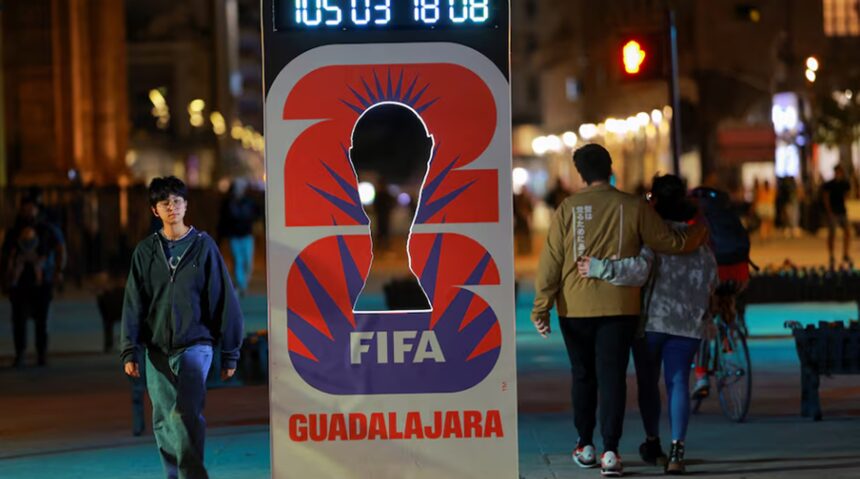
With 100 days to go until the kickoff of the 2026 FIFA World Cup in the United States, Mexico, and Canada, demand for tickets has surged, despite skyrocketing prices and global concerns following the U.S. and Israel strikes on Iran.
The security and political tensions in host countries have raised concerns among fans. Stricter enforcement by U.S. Immigration and Customs personnel and recent violence in Guadalajara, Mexico, following the death of a top cartel leader, have added to anxieties.
“I’m worried I might not be allowed into the country. I plan to fly to Canada at most, but not the U.S.,” said German football fan Tom Roeder.
“I hope the conflict with Iran doesn’t reach North America, at least not in a way that affects us personally.”
Despite these concerns, FIFA reported that nearly two million tickets were sold in the first two sales phases, with demand exceeding supply over 30 times. FIFA President Gianni Infantino said:
“We will have seven million fans in stadiums… We had demand for over 500 million tickets, while only six to seven million are available for sale.”
Infantino added that additional tickets will be available in a final sales phase starting in April, following the elimination matches.
Host Nations Respond to Concerns
Mexican President Claudia Sheinbaum assured fans that there is “no risk” attending matches, while Adrian Nunez Corte, head of the Spanish fan association Unipes, stated that political and social tensions haven’t dampened ticket demand.
“It is causing concern, but Spanish fans in the area helped calm the situation after the initial alarm,” Corte said.
Fans are advised to prepare visas carefully, especially when traveling between the U.S. and Mexico for matches.
High Prices Are a Major Barrier
The geography of the tournament, spanning 16 cities across three countries, increases costs for fans wishing to follow their teams. Ticket prices have been cited as a significant obstacle, limiting the number of matches individual fans can attend.
“Ticket prices are a major hurdle, affecting both the number of games attended and travel distances,” Corte noted.
The secondary ticket market is also booming, with tickets often sold above face value, which is legal in the U.S. and Canada. FIFA defends this model as part of its nonprofit mandate, reinvesting over 90% of revenue from 2023–2026 into global football development.
Fans Fear a “World Cup for the Elite”
Mehdi Salem, vice president of French fan association Les Baroudeurs du Sport, reported a 200% increase in demand compared to 2018. However, due to prices and political concerns, his association of 400 members can only send 100 participants.
“We feel this World Cup will not truly be a people’s World Cup, but rather an elite World Cup,” Salem said.