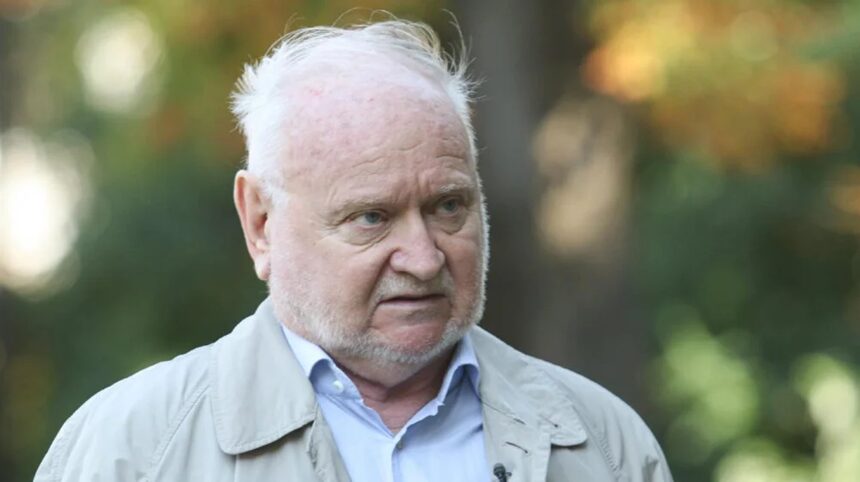
Serbian psychologist and former Deputy Prime Minister Žarko Korać has delivered one of the sharpest public critiques yet of President Aleksandar Vučić, calling the recent state summit on the future of NIS “a comic and ugly show” and condemning Vučić’s political theatrics as an attempt to shield himself from responsibility.
Speaking on N1 Direktno, Korać said Serbia has no alternative but to take over NIS, but noted that Vučić is deliberately turning a straightforward state decision into a dramatic spectacle for political gain.
According to Korać, Vučić continues to place his party’s interests far above national interests.
“Vučić calls this the most difficult decision of his political career. Let me remind him: when Karađorđe and the peasants decided to rise up against the Ottoman Empire — then a global power — that was a historic decision. And now he compares taking over a refinery with the greatest national sacrifices in Serbian history,” Korać said. “This is not the hardest decision for Serbia — it’s only hard for him.”
Korać also argued that Russia’s behavior makes clear how deep Moscow’s influence runs in Serbia.
“If the Russians were well-intentioned, they would simply sell NIS. No one is asking for it as a gift,” he said, adding that Moscow is playing a cynical game of ‘take it if you can’ and testing Serbia’s political will.
“Vučić has always behaved like a self-proclaimed emperor”
Korać was scathing about Vučić’s leadership, accusing him of ruling as an autocrat who now panics when forced to make an unpopular move.
“He has acted like a self-proclaimed emperor for a decade — no decision could be made without him. And now, suddenly, when he must carry the burden of an unpopular decision, he hides behind a crowd of ministers, directors, and party loyalists,” he said.
According to Korać, this is a familiar pattern: Vučić centralizes all power until accountability arrives — then he distributes blame across the entire state apparatus.
Police violence and the growing anger of citizens
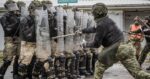
Korać also condemned the police brutality witnessed during Monday’s protests in Novi Sad, calling the intervention “terrifyingly aggressive.”
He singled out the leadership choices within the police, pointing to Marko Kričak — appointed to head the protection unit despite not coming from police ranks.
“I would ask Mr. Kričak in good faith: what will you do when this government changes? How will you look people in the eye, when your name is known to a million citizens? A smart policeman does not behave like this,” Korać said.
He warned that the regime’s orders are destroying the fragile trust between citizens and police.
“You are dismantling a relationship that is essential for public order. A woman was dragged by the hair and beaten by the Gendarmerie. What should she think of the police now?” Korać asked.
A regime losing control
Through his remarks, Korać portrayed a president who governs by fear, spectacle, and manipulation — and a security apparatus increasingly weaponized against the public.
The crisis surrounding NIS, he argued, has exposed not only Russia’s deep leverage over Serbia, but also Vučić’s inability to lead transparently or responsibly when the stakes are high.