The civic organization Zbor građana Novog Pazara has sent an open letter to Turkish President Recep Tayyip Erdoğan, urging him not to support the current Serbian government, which they claim is conducting systematic repression in the Sandžak region.
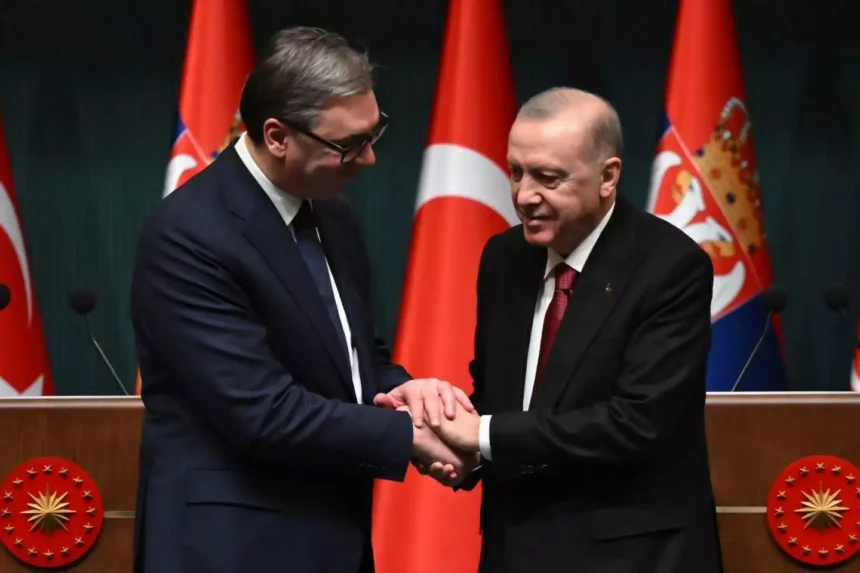
The letter follows the recent visit of Serbian President Aleksandar Vučić to Ankara, as well as Erdoğan’s expected visit to Serbia.
Allegations of Political and Cultural Suppression
According to the statement, diplomatic relations and economic cooperation should not be used to artificially strengthen the image of a government accused of marginalizing Bosniaks and Muslims.
The organization claims that Bosniaks in Sandžak face limitations on the use of the Bosnian language and lack sufficient promotion of Bosniak cultural identity on public broadcasting platforms. It also alleges that Serbian authorities tolerate rhetoric that is offensive toward the Bosniak community.
Concerns Over Political Influence During Election Period
The letter raises concerns about the potential misuse of Erdoğan’s international influence during Serbia’s election year, warning that high-level diplomatic engagement could create the perception of foreign support for policies allegedly discriminating against Bosniaks and Muslims.
“While official protocols speak of partnership, people in Novi Pazar and Sandžak experience a harsher reality – decades of economic suffocation, pressure on youth and academic institutions, security intimidation, and systematic division,” the organization stated.
Economic and Infrastructure Criticism
The group also claims that no major industrial investments have been established in the region over the past three decades, contributing to unemployment and the migration of young people. Additionally, it highlights poor and unsafe road infrastructure, which allegedly continues to isolate Sandžak from other parts of Serbia and the region.
Allegations of Interference in Religious and Political Affairs
The statement further accuses Serbian authorities of weakening the Bosniak political and social community by deepening internal divisions. It alleges that the government interferes in religious institutions and political organizations to prevent unity among Bosniaks.
The civic organization concluded by emphasizing the importance of allowing both the international community and Turkish leadership to hear what it described as the authentic voice of citizens who refuse to be used in political campaigning.