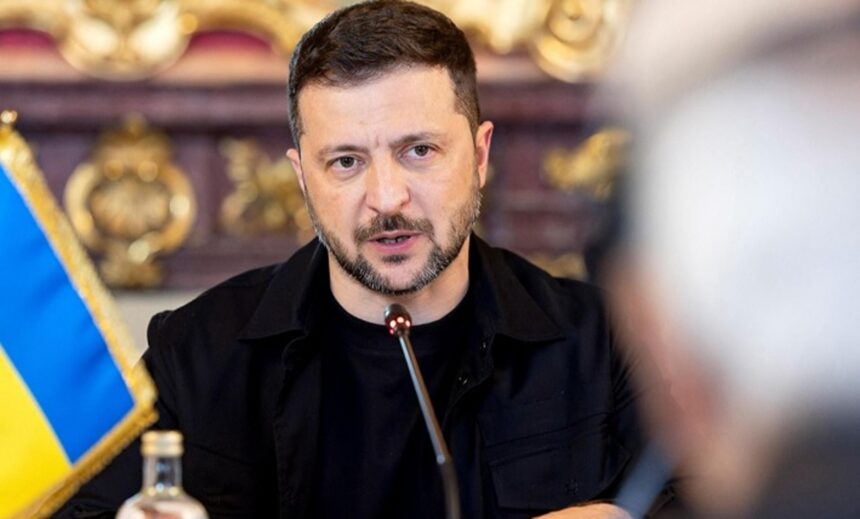
Ukrainian President Volodymyr Zelensky has called for a “dignified peace” backed by firm security guarantees, as senior Ukrainian and U.S. officials prepare for high-level talks in Berlin aimed at ending Europe’s deadliest conflict since World War II.
Zelensky’s remarks come ahead of meetings with American envoys and European allies, at a moment of heightened diplomatic pressure from U.S. President Donald Trump, who has pushed for a peace agreement that initially reflected key demands from Moscow.
“Ukraine needs peace on dignified terms, and we are ready to work as constructively as possible,” Zelensky wrote on X, adding that the coming days will be filled with intensive diplomacy and that results are urgently needed.
The Ukrainian leader accused Russia of deliberately prolonging the war through deadly bombardments of Ukrainian cities and critical energy and water infrastructure, undermining any genuine effort toward peace.
Although the exact format of Sunday and Monday’s meetings has not been fully disclosed, a U.S. official confirmed that Trump’s special envoy Steve Witkoff and his son-in-law Jared Kushner are traveling to Germany for talks with Ukrainian and European counterparts.
The decision to dispatch Witkoff—who has led U.S. negotiations with both Kyiv and Moscow on a proposed American peace framework—signals that Washington sees a possible opening for progress, nearly four years after Russia launched its full-scale invasion in 2022.
Ukraine’s Deputy Foreign Minister Sergiy Kyslytsya confirmed he is in Berlin for “a full day of meetings,” underscoring the intensity of the diplomatic push, though he provided no further details.
German Chancellor Friedrich Merz is set to host Zelensky and European leaders for a summit on Monday, continuing a wave of public support from across Europe for Ukraine’s leadership and sovereignty.
The United Kingdom, France, and Germany have been working to revise U.S. peace proposals, which, according to a leaked draft last month, would have required Ukraine to cede additional territory, abandon its NATO membership aspirations, and accept limits on its armed forces—terms widely viewed in Kyiv and European capitals as deeply unfavorable and potentially destabilizing.
European allies have described the current moment as “critical” for Ukraine’s future, while pushing to increase financial assistance to Kyiv, including through the use of frozen Russian assets.
Earlier this month, Russian President Vladimir Putin hosted Witkoff and Kushner for talks, which the Kremlin described as “constructive,” though no major breakthroughs were announced.
As diplomacy accelerates, the central question remains whether peace can be achieved without sacrificing Ukraine’s sovereignty, security, and long-term future.