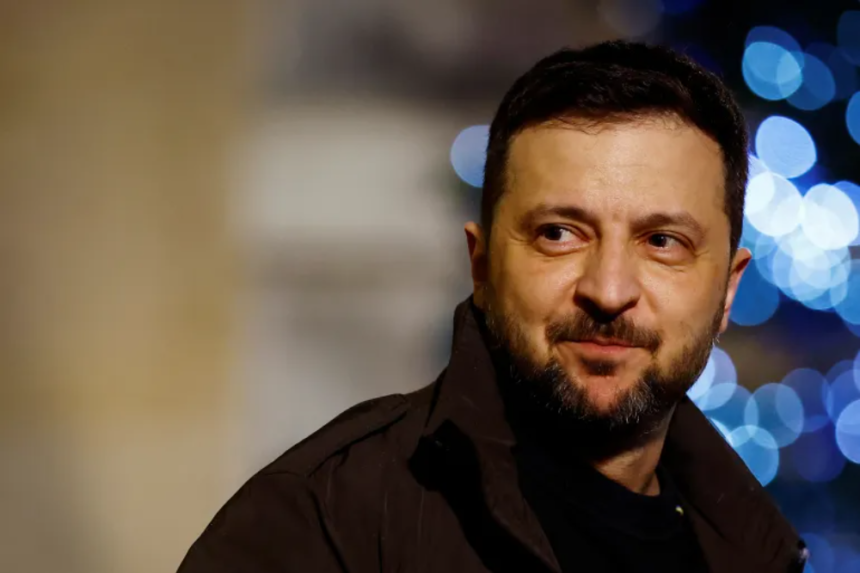
Three days of negotiations between Ukrainian and American officials in Miami ended with a positive atmosphere but no concrete progress, as Ukrainian President Volodymyr Zelensky prepares to meet European leaders on December 8 to discuss next steps toward peace.
Just hours after Zelensky said he held a “very constructive” phone call with the U.S. negotiating team — led by Special Envoy Steve Witkoff and Jared Kushner, son-in-law of U.S. President Donald Trump — Russia launched new overnight airstrikes on critical Ukrainian infrastructure despite worsening winter conditions.
The mayor of Kremenchuk, a major industrial center, reported a “massive” attack that disrupted electricity and water supplies. No deaths have yet been confirmed. In eastern Ukraine, Russian strikes hit the city of Sloviansk, injuring seven people.
Despite intensified diplomatic efforts, Russia continued its air assaults, claiming to have shot down 77 Ukrainian drones overnight.
Zelensky to Seek Stronger European Backing
Following the talks in Florida, Zelensky wrote on Telegram that Ukraine remains committed to “honest work” with the U.S. to achieve real peace, adding that both sides had agreed on next steps and future formats — without providing further details.
On Monday, Zelensky will meet European allies in London alongside British Prime Minister Keir Starmer, French President Emmanuel Macron, and German Chancellor Friedrich Merz.
Macron stated on December 6 that “Ukraine can count on our unwavering support” and confirmed that Europe would reassess the peace negotiations.
European governments have been skeptical of the early versions of Washington’s peace plan, viewing them as overly favorable to Russia.
Macron, Merz, Starmer, and Zelensky recently discussed the possibility of deploying a European peacekeeping force in Ukraine should a ceasefire be reached.
Disputes Over U.S. Peace Plan
This diplomatic push follows the leak of a 28-point U.S. peace plan in November. The initial proposal was criticized in Kyiv for being too accommodating to Moscow, though it has reportedly been revised several times to address Ukraine’s concerns.
The latest version has not been released publicly.
Washington has urged both Kyiv and Moscow to agree on a framework to end the war. However, progress remains minimal, as both capitals continue to negotiate separately with the U.S.
Macron said Europe would continue working alongside the U.S. to provide security guarantees for Ukraine, essential for “long-term peace.” He added that “Russia remains committed to escalation, not peace,” and stressed the need to maintain pressure on Moscow.
Moscow’s Position Remains Hardline
A U.S. briefing after the second day of talks on December 5 emphasized that any real progress depends on Russia’s willingness to pursue lasting peace, including steps toward de-escalation.
Key issues remain unresolved, including security guarantees for Ukraine and potential territorial concessions.
Russia currently occupies around one-fifth of Ukraine, including large areas of the Donbas region.
The Miami talks followed a recent visit to Moscow by Kushner and Witkoff.
On December 3, President Trump said the U.S. delegation had a “very good meeting” with Russian President Vladimir Putin and suggested that Putin appears ready to end the war, despite no agreement being reached.
Putin later said he is prepared to continue meeting with American officials “as often as needed.”
The war in Ukraine began on February 24, 2022. Putin describes it as a “special military operation” aimed at demilitarizing Ukraine — a claim rejected by Kyiv and the West.
Western nations have retaliated by imposing sweeping sanctions on Russia, while the conflict has killed thousands and displaced millions.