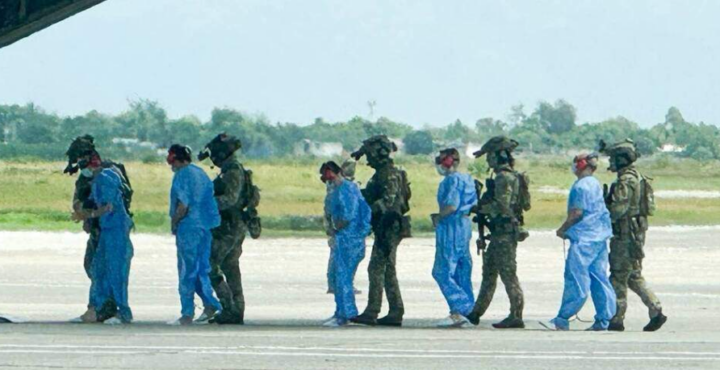
Eighteen people suspected of involvement in the 2021 assassination of Haitian President Jovenel Moïse have been transferred from Haiti to the United States to face charges, U.S. authorities said.
The suspects were flown to Florida on Sunday as part of the ongoing U.S. investigation into the killing of Moïse, who was shot dead at his home in the Haitian capital, Port-au-Prince, in July 2021.
The assassination was allegedly carried out by a group of mercenaries, most of them former Colombian soldiers. The case has remained a major challenge for Haiti, where investigations have been hampered by widespread gang control and the weakening of the country’s judicial institutions.
Jason Reding Quiñones, U.S. Attorney for the Southern District of Florida, described the extraditions as an important new stage in efforts to establish accountability for the assassination.
“Five years later, we continue to bring defendants before U.S. courts, and we are not finished yet,” Quiñones said in a statement posted on X.
He said charges have now been brought against 30 people in connection with the assassination.
Alleged plot stretched across several countries
U.S. prosecutors allege that the planning and financing of the operation were coordinated from Florida, the Dominican Republic and Haiti.
Because of the severe difficulties facing Haiti’s justice system, U.S. prosecutors have taken a leading role in bringing suspects to Florida and pursuing the cases in American courts.
Among those extradited Sunday were 17 former Colombian soldiers and Joseph Badio, a former senior Haitian government official who worked in an anti-corruption unit within Haiti’s Justice Ministry.
A Miami-based security company has also been accused of playing a key role in recruiting the former Colombian soldiers, according to U.S. authorities.
FBI Special Agent Brett Skiles said the arrests, carried out internationally and at multiple locations, demonstrated the bureau’s continuing efforts to bring everyone allegedly involved in the conspiracy before the courts.
The killing of Moïse, who was 53, shocked Haiti and further deepened the country’s political and security crisis. The armed attackers entered his residence and shot him in his bedroom, while his wife, Martine Moïse, was also wounded in the attack.
The latest extraditions mark another major step in the U.S. prosecution of suspects in a case that has remained unresolved in Haiti five years after the president’s assassination.