An investigation by Serbian professors has raised serious allegations that Chinese companies involved in major railway reconstruction projects in Serbia, together with their subcontractors and suppliers, used fictitious invoices to extract millions of euros from public funds, while the Serbian Tax Administration approved questionable VAT refunds.
According to an investigation published by Radar, companies involved in the reconstruction of the Belgrade–Stara Pazova and Novi Sad–Kelebija railway sections received approximately €150 million in VAT refunds between 2020 and 2025.
The findings, presented by Ognjen Radonjić, a professor at the University of Belgrade’s Faculty of Philosophy, and Vladimir Obradović, a professor at the Faculty of Organisational Sciences and member of the Inquiry Commission, point to suspected fictitious transactions, cash withdrawals and potentially unlawful tax refunds.
The authors argue that the available financial records raise questions about whether the Tax Administration, rather than preventing tax fraud, may have enabled a network involved in diverting public money.
According to the figures obtained by the investigators, the Beijing-based CRIC company’s Belgrade branch received 7.5 billion dinars in VAT refunds during the five-year period. Its Chinese subcontractors also received substantial amounts:
- CRSC branches: 1.1 billion dinars.
- CRCEB Serbia: 545 million dinars.
- Shandong Luqiao Group Serbia: 3.04 billion dinars.
- CCECC Balkan: 4.3 billion dinars.
- Ingrap-Omni, one of CCECC’s major suppliers: 1.14 billion dinars.
The combined refunds amounted to approximately 17.6 billion dinars, or €150 million.
Fictitious invoices and suspected money laundering
The investigation describes a suspected scheme in which companies issued invoices for goods, services or construction work that may never have been delivered or performed.
Such invoices allegedly served two purposes: artificially increasing business expenses to reduce corporate profit tax and creating grounds for unjustified VAT deductions or refunds from the state budget.
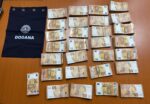
Once payments reached the accounts of companies issuing the allegedly fictitious invoices, the money was reportedly withdrawn in cash, transferred through other businesses or used to purchase cryptocurrencies, particularly Tether (USDT).
The authors identified a recurring pattern involving companies with short business histories, few or no employees, unusually high turnover and frequent changes of ownership, management and registered addresses.
Some of these companies reportedly had blocked bank accounts, lost their tax identification numbers or were eventually forcibly liquidated.
Shandong transactions raise questions
One example concerns Shandong Luqiao Group Serbia, which recorded transactions worth 425.2 million dinars with a company called Ju-drvo 2000 between 2022 and 2024.
According to the investigation, there are suspicions that a substantial portion of these transactions was fictitious, with invoices listing quantities of gravel significantly exceeding the amounts required for the construction work.
The authors argue that the transactions may have enabled Shandong to inflate expenses, claim unjustified VAT refunds and facilitate the withdrawal of money from legitimate business channels.
Shandong also paid 2.13 billion dinars to DIS Niskogradnja, based in Valjevo, during the same period. The investigation alleges that the Tax Administration approved VAT refunds worth millions of euros to Shandong despite having conducted a tax inspection.
CCECC supplier linked to suspicious financial transactions
Another example involves Fjord 2020, a supplier to Chinese construction company CCECC, which was involved in the reconstruction of Novi Sad Railway Station.
The investigation traces 43.87 million dinars transferred to Fjord 2020 through a network of intermediary companies.
The company changed its business activities and ownership several times. It reportedly failed to publish financial statements after 2021 and was eventually forcibly liquidated on April 28, 2026.
Financial records examined by the authors also show that 32.52 million dinars were withdrawn in cash within the wider network, while another 135.76 million dinars were recorded as dividend and bonus payments.
The investigators believe these transactions may have formed part of a broader mechanism for diverting funds allocated to railway reconstruction.
Antikor received millions from Chinese contractors
The investigation also examines Antikor, a subcontractor working with Shandong and CCECC during 2023 and 2024.
The company reportedly received approximately €7.53 million during that period, including more than €3.6 million from Shandong, €1.64 million from CCECC, €692,276 from Karin Komerc and €1.59 million from OBW Gradnja.
Antikor’s director and co-owner, Miloš Tatomir, reportedly received approximately 106.4 million dinars in salaries and dividends. Additional payments included three million dinars in bonuses to Mira Petković and 11.7 million dinars in dividends to majority shareholder Dejan Živojinović.
Another suspected channel involved Koting Solutions, a company established in June 2023 that invoiced Antikor for 61.5 million dinars.
According to the investigation, 166 cash withdrawals totalling approximately 4.45 million dinars were recorded from Koting Solutions’ accounts, alongside additional ATM withdrawals.
Antikor also submitted 23 VAT refund applications between early 2023 and late 2024, receiving approximately 193.8 million dinars. The authors claim that part of this money was refunded without a lawful basis.
Questions over the role of the Tax Administration
The investigation raises serious questions about the role of Serbia’s Tax Administration, headed by Dragana Marković, particularly regarding the approval of VAT refunds even after tax inspections had reportedly been conducted.
The authors are calling for an investigation into who authorised the payments, what inspectors discovered and whether senior officials took action to prevent potential abuses.
They also refer to information suggesting that an informal instruction may have been issued to avoid tax inspections of companies involved in constructing facilities for Expo 2027. These allegations have not been independently established.
The professors argue that the financial transactions described in their investigation could indicate organised criminal activity rather than isolated corruption, requiring scrutiny of the entire network, including potential protection within state institutions.
They also stress that the investigation must examine whether financial irregularities were connected to the quality and safety of construction work.
The issue carries particular significance following the collapse of the canopy at Novi Sad Railway Station, which killed 16 people and seriously injured another.
The authors insist that accountability must extend beyond those who withdrew the money, encompassing the alleged organisers, ultimate beneficiaries and anyone in public institutions who knowingly enabled the suspected practices.