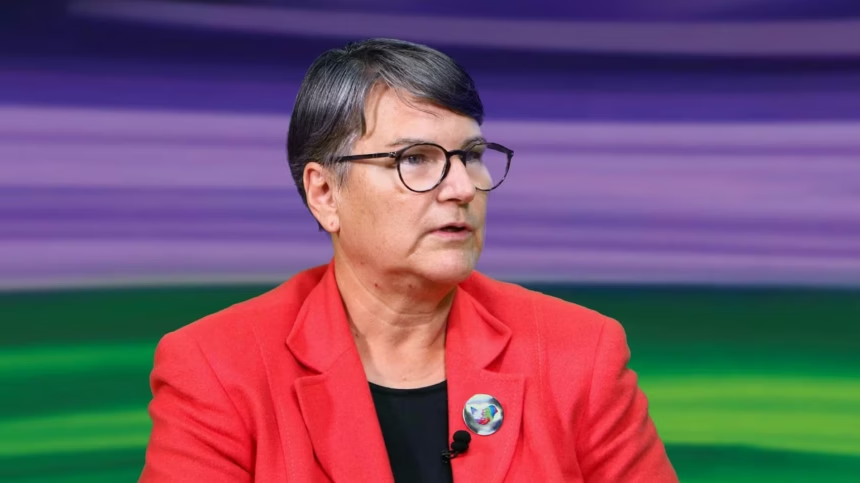
Former University of Belgrade rector Ivanka Popović has accused the Serbian Progressive Party (SNS) of systematically undermining education and diminishing the influence of universities over the past decade, warning that further scandals involving the previous government could emerge in the coming months.
Speaking about the new composition of Serbia’s National Assembly, Popović said her primary expectation was a change in political discourse, expressing hope that parliamentary debates would become more fact-based and less dominated by insults, hate speech and political confrontation.
Commenting on a report by the Commission of the Supreme Public Prosecutor’s Office, Popović said she was not surprised by the findings, arguing that individuals and groups opposing the SNS government had been subjected to various forms of surveillance for years.
She said the growing influence of the student movement had become a significant threat to the party and President Aleksandar Vučić, prompting attempts to monitor and discredit the movement, including through what she described as potentially fabricated cases.
Popović also accused the SNS of exploiting educational institutions and deliberately weakening the position of universities in Serbian society.
According to her, the party has followed a consistent pattern over the past decade of treating education as a threat because educated citizens are more likely to recognise political manipulation.
She argued that once the SNS realised it could no longer count on broad support from the academic community, it began systematically undermining education as a social value and reducing the public influence of universities and the wider educational system.
“The damage has already been done, and the education system is on its knees,” Popović said.
She stressed that rebuilding Serbia’s institutions would require a long-term effort, warning that the problems accumulated over the previous 14 years could not be resolved overnight.
Popović said virtually every segment of Serbian society had been damaged, with trust between institutions and citizens severely weakened. She called for a realistic recovery plan, implemented step by step, and urged citizens not to become discouraged by the time and effort required to bring about meaningful change.
She also predicted that numerous scandals and allegations involving the previous authorities would gradually come to light.
“We do not even know what will eventually be uncovered. I believe various scandals, both major and minor, will continue emerging for months,” she said.
Popović described the current political developments as the beginning of a much larger process, suggesting that the establishment of the new parliament would provide mechanisms for addressing irregularities more effectively.
She said recent attempts by individuals to distance themselves from previous decisions and political activities reflected a struggle to protect their own positions and political futures.
Regarding the parliamentary session scheduled for November 17, Popović said she expected the first major change to be a transformation in the way politicians communicate.
She expressed hope that parliamentary proceedings would move away from what she described as a culture of hate speech and reality-show-style confrontations, towards informed discussions based on evidence, knowledge and facts.
However, she warned that the new opposition would likely attempt to preserve the confrontational approach of the previous parliamentary majority and provoke the incoming government.
Popović said the new parliamentary majority would face the challenge of establishing a different political culture while resisting attempts to portray it as inexperienced or incapable of governing.
Addressing concerns about the majority’s limited political experience, she pointed to the student movement’s rapid development, arguing that its members had demonstrated an ability to learn quickly and adapt to political challenges.
She acknowledged that the transition from activism to parliamentary politics would bring difficulties but expressed confidence that the new representatives could establish a more constructive approach.
Popović also called on citizens to remain actively engaged in public life, stressing that political change must be accompanied by continued civic oversight.
She warned that the previous ruling structures could remain a serious challenge despite losing their parliamentary majority, predicting continued attempts to destabilise the new government.
She further emphasised the importance of ensuring that media outlets operate within the law, particularly regarding the distinction between legitimate political expression and unacceptable forms of public discourse.