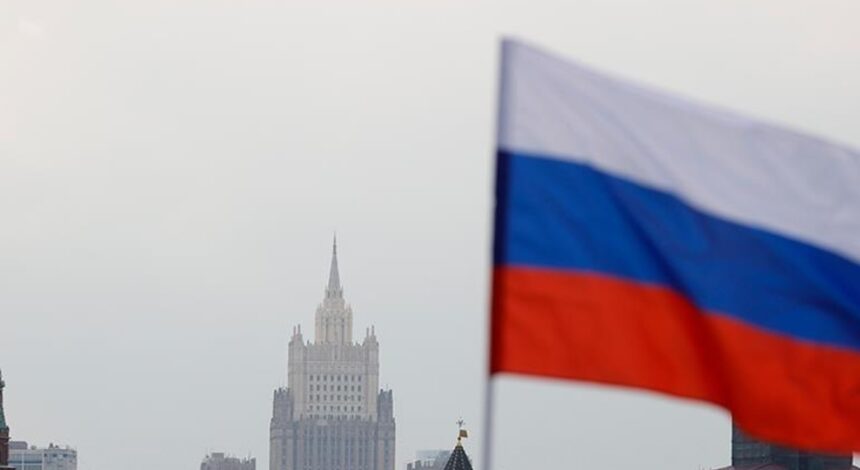
European intelligence officials have warned that Russia could seek to test NATO in the near future, with one senior intelligence chief saying a potential escalation could occur within “months, not years.”
The warnings come after Polish Prime Minister Donald Tusk told parliament that intelligence assessments indicated Russia could launch a drone or missile attack against NATO territory in the coming months, potentially as an attempt to test the alliance’s collective-defense commitment under Article 5.
French President Emmanuel Macron described Tusk’s warnings as “well-founded and well-documented” and convened political party leaders and candidates for France’s 2027 presidential election for an emergency meeting in Paris on Friday. The discussions included intelligence assessments concerning what Macron described as a growing threat from Russia.
The concerns come as the UN General Assembly meets in New York and as Russia and Ukraine continue to intensify their respective aerial campaigns. Ukraine launched hundreds of drones and missiles against Moscow and other Russian regions early Sunday in one of its largest aerial attacks of the war.
In separate interviews with The Guardian over the past week, European intelligence chiefs discussed their assessments of the potential threat from Moscow.
Michal Koudelka, head of the Czech Security Information Service (BIS), said increased drone activity could potentially be accompanied by a limited incursion into NATO territory bordering Russia, as well as other forms of pressure.
“It is possible. It could involve a limited incursion, false-flag provocations or a major influence campaign,” Koudelka said in an interview at the agency’s headquarters in Prague.
He said such a scenario could potentially materialize within “months, not years,” while stressing that efforts were being made to prevent it from happening.
Officials in the Baltic states, however, have expressed greater caution over predictions of an imminent Russian attack. They have pointed to Moscow’s military resources being tied up in the war in Ukraine and warned that excessive public discussion of a potential attack could contribute to the Kremlin’s efforts to spread fear and uncertainty.
“We do not see signs of an imminent attack,” said Normunds Mežviets, director-general of Latvia’s State Security Service (VDD), in an interview in Riga.
Mežviets acknowledged indications that Moscow was preparing for potentially more decisive actions in Europe, but said it remained unclear whether those preparations represented concrete plans for military action or broader efforts to destabilize Western societies.
“It remains an open question whether they have direct and concrete plans, or whether this is simply part of their broader efforts to spread fear and uncertainty in Western society,” he said.
Estonian Foreign Ministry Secretary General Jonatan Vseviov also criticized what he described as “panic on social media” surrounding reports of a possible Russian attack.
“If there is reason to fear an attack, rest assured: we will make this clear. Until then, stay calm, continue your normal lives and support Ukraine,” Vseviov wrote on X on Saturday.
Mežviets said it was nevertheless positive that Western European countries had become more aware of the potential threat posed by Russia.
“Before 2022, we repeatedly warned our Western European partners about the Russian threat, but in most cases our voice was not heard. In 2022, the approach of our partners changed. They accepted that the Baltic states and Poland had been right,” he said.
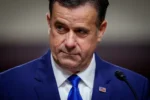
Neither Mežviets nor Koudelka disclosed specific intelligence that might support assessments of Russian plans for the coming months. They also declined to comment on whether CIA Director John Ratcliffe’s reported visit to Moscow last month, which included a stop in Riga, was partly intended to warn the Kremlin about the potential consequences of an attack on NATO territory.
Kremlin spokesman Dmitry Peskov rejected speculation that Russia was preparing an attack against NATO, saying such claims had no connection with Russia’s intentions.
The warnings have nevertheless revived memories of the period before Russia’s full-scale invasion of Ukraine in February 2022, when U.S. officials repeatedly warned that Moscow was preparing for an invasion while the Kremlin denied those assessments.
As Russia’s full-scale war against Ukraine approaches its fifth winter, U.S.-led diplomatic efforts to secure an end to the conflict have yet to produce a comprehensive settlement.