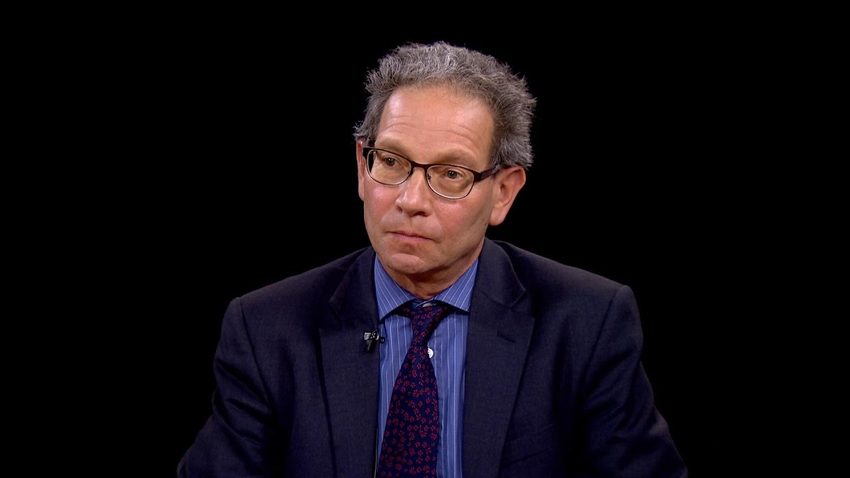
The Hague verdict against former Kosovo President Hashim Thaçi does not mean the West should reconsider its support for Kosovo’s path to independence, according to Charles Kupchan, a former U.S. National Security Council official and professor at Georgetown University.
In an interview with Radio Free Europe, Kupchan said Thaçi’s political trajectory included a transformation from a wartime leader into a civilian political figure who played a significant role in Kosovo’s efforts to achieve independence and develop relations with the United States and European powers.
“Thaçi made that transition, didn’t he? From a wartime leader, now convicted of atrocities, he became a civilian leader who helped Kosovo move toward independence and build its relations with the United States, European powers and others. So, I don’t think this will change,” Kupchan said.
Kupchan described the Hague verdict as a potential short-term shock but said he did not expect it to fundamentally alter Kosovo’s international position.
He said he did not anticipate countries withdrawing their recognition of Kosovo, a deterioration in its Western partnerships or a disruption of its Euro-Atlantic path. In his assessment, the judgment would also not fundamentally undermine the normalization process between Kosovo and Serbia.
Kupchan suggested that, over the longer term, the proceedings could even reinforce the principle that accountability should apply regardless of political circumstances.
“ Kosovo was fighting to defend itself against ethnic cleansing and, for that reason, the war for independence was a just war. However, a just war does not justify war crimes. One injustice cannot be justified by another injustice,” Kupchan said.
“If Thaçi and other members of the KLA committed war crimes — even though the cause they were fighting for was just — then I think the court did what it was supposed to do,” he added.
Asked how Thaçi might ultimately be remembered — as a figure who helped lead Kosovo toward independence or as a man convicted of war crimes — Kupchan said both aspects would form part of his legacy.
“As with other leaders who have done courageous and valuable things, but who have also been accused of criminal acts, including war crimes, in Thaçi’s case there are both sides. It is a complicated legacy,” Kupchan said.
He added that Thaçi would continue to be remembered for his role in Kosovo’s path to independence, while the Hague judgment would now also become an integral part of his historical legacy.
The two moments — Kosovo’s declaration of independence in 2008 and the Hague judgment against Thaçi — are separated by more than 18 years.
How those two chapters will ultimately shape the former president’s historical legacy remains a question for the years ahead.