Latvia has blocked, at the last minute, a French-backed proposal to remove Russian-Uzbek businessman and billionaire Alisher Usmanov from the European Union’s sanctions list.
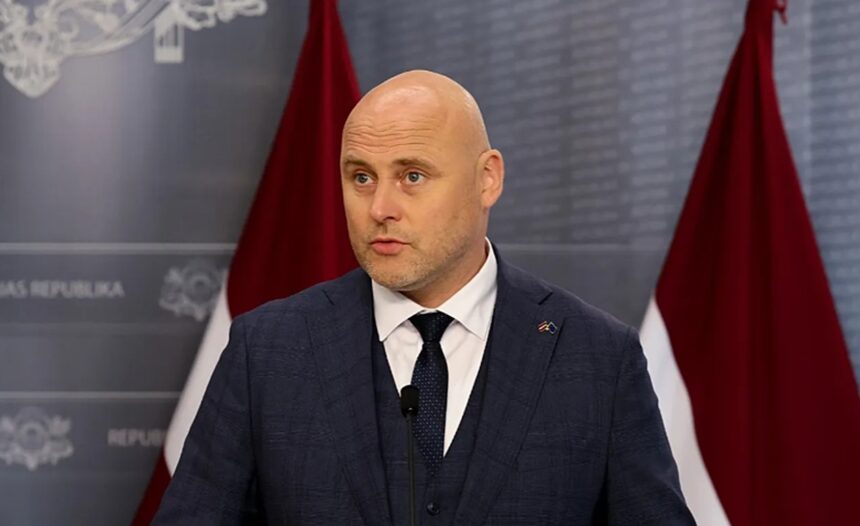
Latvian Prime Minister Andris Kulbergs said his country could not accept the deal, which would have removed sanctions against Usmanov and another businessman, Mikhail Fridman, in exchange for extending the EU sanctions regime for 36 months.
“As long as Russia continues the war, Europe’s pressure must become stronger, not more convenient for the Kremlin,” Kulbergs said.
According to diplomatic sources, France linked its request to remove Usmanov from the sanctions list with the release of two French nationals currently imprisoned in Azerbaijan. Uzbekistan, Usmanov’s country of birth, is reportedly helping mediate the matter.
Slovakia has also called for Usmanov to be removed from the sanctions list, while simultaneously seeking the removal of Mikhail Fridman from the sanctions regime.
To break the deadlock, the Irish presidency of the EU Council had proposed a compromise under which Usmanov and Fridman would be removed from the list, while the entire sanctions regime would be extended for an unprecedented 36 months.
However, Latvia did not give its approval, preventing the agreement from going through, as decisions concerning this sanctions regime require the unanimous support of all 27 EU member states.
Talks among EU ambassadors continued on Tuesday, while the deadline for renewing the sanctions expires on September 22.
If no agreement is reached, the entire sanctions regime covering around 2,600 individuals and entities could expire, including sanctions against Russian President Vladimir Putin.
Usmanov, 73, was sanctioned by the EU following Russia’s full-scale invasion of Ukraine in 2022. The EU linked him to Russian President Vladimir Putin and to key sectors of the Russian economy. Usmanov has denied the allegations and has challenged the sanctions through legal proceedings.
EU foreign policy chief Kaja Kallas said on Monday that sanctions are a key pillar of Europe’s response to Russia’s war and that the objective is to maintain them.