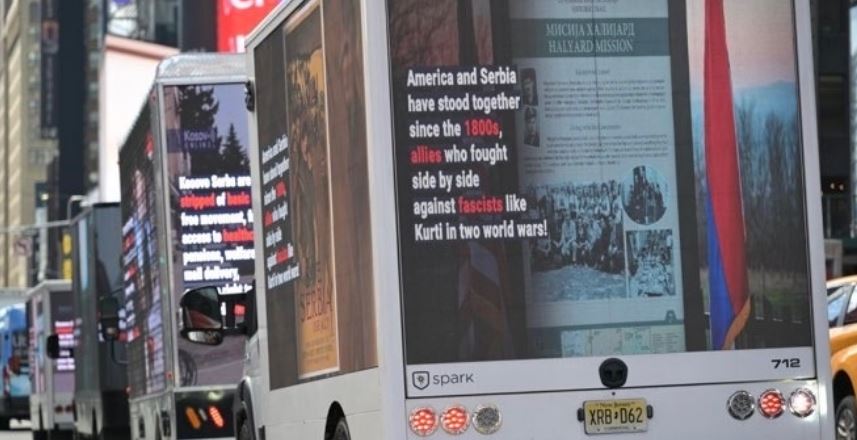
Sputnik and other pro-Serbian media outlets have presented a Serbian diaspora campaign in New York as a “humanitarian” initiative intended to show the international public what they describe as the “difficult life of Serbs in Kosovo.”
The organizers have said the campaign is “not political” but rather “humanitarian and patriotic.” However, the campaign is taking place during the UN General Assembly’s High-Level Week, when New York hosts senior international officials and diplomats, while its stated objective is to influence how the situation of Kosovo Serbs is perceived internationally.
Against this backdrop, the campaign can be viewed as a form of public political advocacy, regardless of the terminology used by its organizers.
New York’s streets have become a platform for the campaign, with trucks equipped with large video screens circulating through the city, including Times Square. The footage presents images intended to portray the situation of Kosovo Serbs primarily through violence, repression and suffering.
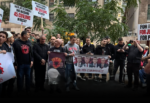
The analysis argues that the campaign’s messaging relies heavily on selective presentation of visual material. The screens combine footage from the March 2004 unrest in Kosovo, the 2023 shooting and wounding of Serbian teenager Stefan Stojanović, protests involving Serbian doctors and the detention of Serbs.
By placing events from different years and circumstances within a single narrative, the campaign, according to the analysis, creates the impression that they form part of one uninterrupted history of the “persecution of Serbs.”
The use of footage from the 2004 unrest is particularly significant because it is being presented within a campaign focused on contemporary Kosovo, despite the substantial time difference between the events.
Sputnik and other pro-Serbian media outlets have further amplified the campaign by presenting it as an authentic reflection of the “life of Serbs in Kosovo.” Critics of the campaign argue that such coverage does not sufficiently emphasize that the material is promotional content selected to advance a particular narrative in an ongoing political dispute.
The campaign comes amid heightened diplomatic activity surrounding the UN General Assembly, providing its organizers with an international audience at a time when Kosovo-Serbia relations remain a prominent regional issue.