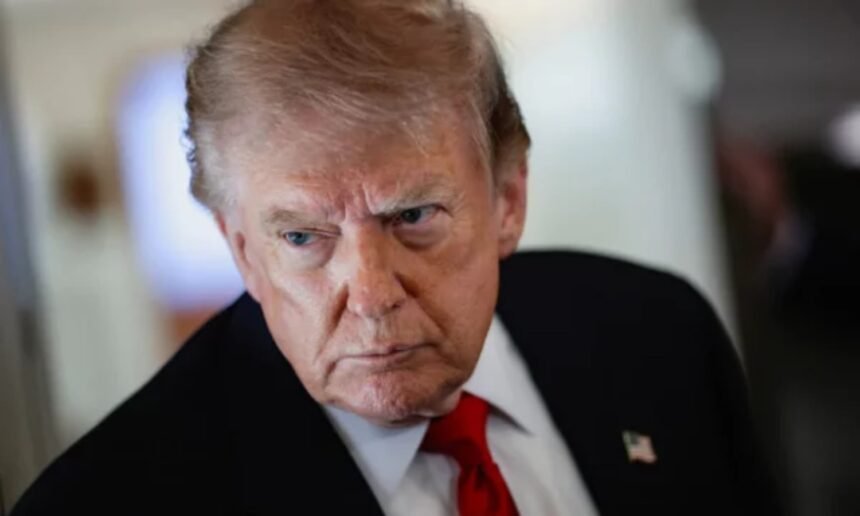
U.S. President Donald Trump told the United Nations General Assembly on Tuesday that he faces a “big decision” over whether to launch further military action against Iran or pursue a negotiated settlement, while warning that he could “destroy” the Islamic Republic if the conflict remains unresolved.
Trump made the remarks during his address to world leaders in New York, where he devoted a significant portion of his speech to defending the U.S. conflict with Iran. He said the military campaign had prevented Tehran from obtaining nuclear weapons and argued that his approach of applying pressure and threats of force was producing results.
“A deal with Iran that allows them to rebuild and create a country much stronger than ever before?” Trump asked. “Or do I destroy the Islamic Republic and do it quickly, never giving them the opportunity again to kill and destroy people and countries?”
Trump also said he believed an agreement with Iran could be reached following the November U.S. midterm elections, despite the absence of a deal so far.
His comments came as U.S. and Iranian officials held discussions on the sidelines of the UN General Assembly in New York, with Qatar acting as an intermediary.
Iranian state television confirmed that Foreign Minister Abbas Araghchi met U.S. special envoy for the Middle East Steve Witkoff. Iranian Foreign Ministry spokesman Esmail Baghaei, quoted by the state-run IRNA news agency, said Tehran had conveyed its conditions through the Qatari mediator, including an end to the conflict on all fronts and a halt to what Iran described as U.S. “acts of aggression.”
Witkoff later said the discussions had been conducted through intermediaries who moved between the two sides throughout the day.
“They successfully concluded a round of discussions, which we hope will prove constructive and promising,” Witkoff said, adding that the intermediaries would continue their work.
Trump later described the three-hour meeting as “very productive.”
The talks took place against the backdrop of a wider diplomatic push at the UN, with Trump also meeting more than a dozen world leaders during his visit to New York.
In his address, Trump criticized what he called “global governance” and emphasized his administration’s record on the U.S. economy, immigration, border security and violent crime. His speech also included a pledge to help end the war between Russia and Ukraine and to ensure that the United States remains ahead in artificial intelligence.
Trump said he was working closely with Russian and Ukrainian leaders to end the war in Ukraine, adding that a resolution would come “sooner than people think.” Fighting, however, continues, with both sides carrying out missile and drone attacks.
The U.S. president’s comments contrasted with UN Secretary-General António Guterres’ earlier warning that global divisions are deepening and that countries remain interconnected despite growing geopolitical tensions.
The Iran conflict has also contributed to higher global oil prices and intensified international concerns over the wider consequences of continued military escalation in the Middle East.
Trump’s remarks therefore left open two competing tracks for Washington’s Iran policy: continued military pressure, including further strikes, or negotiations aimed at securing an agreement with Tehran.