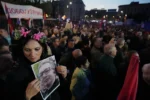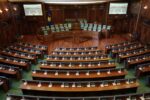
Bosnia and Herzegovina’s latest elections have once again highlighted the country’s deep ethnic and political divisions, while also putting its stalled European integration process and economic challenges under the spotlight.
Preliminary results from the Central Election Commission indicated that Denis Bećirović, a Social Democratic Party (SDP) candidate representing the Bosniak electorate, Željka Cvijanović of the Alliance of Independent Social Democrats (SNSD), representing the Serb electorate, and Darijana Filipović of the Croatian Democratic Union (HDZ BiH), representing the Croat electorate, were leading the races for the country’s three-member Presidency.
The election was closely watched because of its potential implications for Bosnia and Herzegovina’s political direction, relations between its constituent communities and the country’s aspirations for closer integration with the European Union and NATO.
Identity Politics and Ethnic Divisions
Bosnia and Herzegovina’s Presidency consists of three members — one Bosniak, one Serb and one Croat — reflecting the power-sharing system established under the 1995 Dayton Peace Agreement.
The election campaign again featured strong debates over national identity and ethnic representation. At the same time, economic concerns remained important for voters, including wages, employment and the rising cost of living.
The country continues to face significant demographic challenges, with large numbers of young people leaving in search of employment and better living conditions abroad.
Dodik’s Continuing Political Influence
Bosnia and Herzegovina remains divided into two entities: the predominantly Serb Republika Srpska and the mainly Bosniak-Croat Federation of Bosnia and Herzegovina. The two entities operate alongside the country’s central institutions under the complex constitutional framework created by Dayton.
Although Milorad Dodik was barred from holding public office following his conviction and a six-year ban, he remains a major political figure in Republika Srpska and continues to lead the SNSD. He declared victory for his party following the elections.
The election results again demonstrated the continued influence of the SNSD in Republika Srpska, while Dodik’s political positioning remains closely associated with opposition to greater centralization of Bosnia and Herzegovina and with stronger ties to Russia.
At the same time, the elections introduced expanded technological measures aimed at strengthening electoral integrity. Biometric voter identification and electronic ballot-scanning systems were used at thousands of polling stations, although technical problems were reported at some locations.
EU and NATO Integration
The election also took place against the backdrop of Bosnia and Herzegovina’s stalled EU accession process.
The country obtained EU candidate status in 2022 and was approved to open accession negotiations in 2024, but progress has subsequently been slowed by political disagreements and difficulties in implementing required reforms.
In the Federation of Bosnia and Herzegovina, many Bosniak parties have advocated stronger central institutions and closer integration with the EU and NATO. Bećirović has also presented Euro-Atlantic integration as a key foreign-policy objective.
Croat nationalist parties, meanwhile, have continued to call for changes to the electoral system. They argue that Croats should have greater influence over the selection of the Croat member of the Presidency, particularly because Bosniaks constitute the largest population group in the Federation.
A Familiar Political Balance
The election results therefore leave Bosnia and Herzegovina facing many of the same structural challenges that have shaped its politics for decades: ethnic power-sharing, competing visions of the state, institutional blockages, economic concerns and disagreement over the country’s foreign-policy orientation.
With the Presidency and entity-level institutions taking shape, the central question will be whether the new political configuration can produce greater progress on reforms and European integration, or whether existing ethnic and institutional divisions will continue to dominate the political agenda.