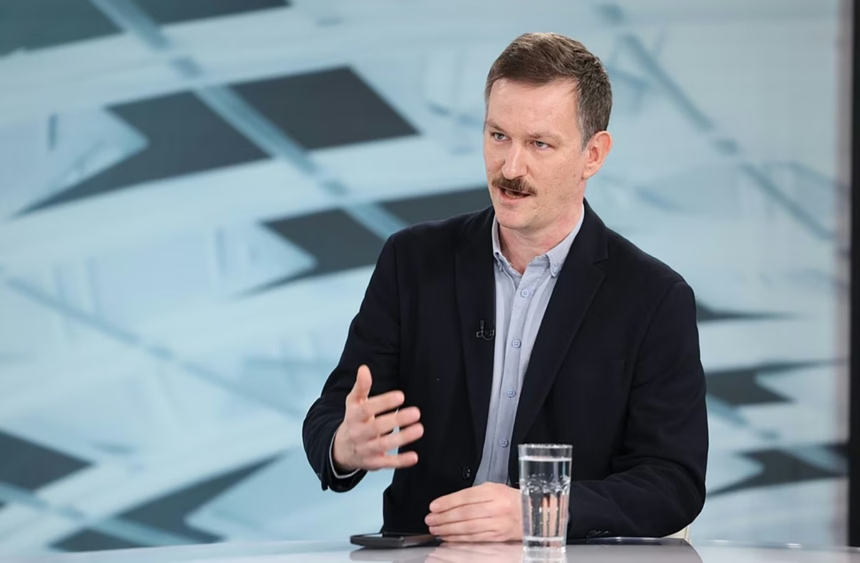
The dismantling of Serbia’s previous political system, built on hierarchy and loyalty, alongside the establishment of new institutions operating within the framework of the Constitution and the law, will be among the first major tasks facing the new government, according to Vujo Ilić of the Institute for Philosophy and Social Theory.
Speaking to N1, Ilić said Tuesday’s developments in the National Assembly were significant, but stressed that the parliament’s most important work still lies ahead.
“Passing legislation, overseeing the government and appointing officials to other institutions – everything that comes next will be more important than this particular day. However, it is encouraging to see such strong public interest in what is happening in the National Assembly. Restoring citizens’ trust will be extremely difficult,” he said.
Asked whether representatives of the Students’ List would struggle against the Serbian Progressive Party (SNS), which has years of parliamentary experience, Ilić argued that extensive political experience is not necessarily a requirement for effective representation.
“I believe that anyone who takes this responsibility seriously and commits themselves to the job can perform it well. What will matter more is how these MPs work together. The Students’ List has a comfortable majority and can begin addressing all the major challenges ahead. Ultimately, everything now depends on them,” he said.
Parliamentary dialogue and presidential elections
Regarding the prospects for dialogue between the government and opposition, Ilić said much would depend on the future Speaker of the National Assembly.
He argued that previous periods of parliamentary decline were largely the result of decisions being made outside parliament rather than within it.
“Whenever our parliamentary life deteriorated, the main responsibility lay with the Speaker of the Assembly, because the real centre of decision-making was not there but somewhere outside the institution. I hope things will be different this time,” Ilić said.
He also pointed to the unusual situation in which the future parliamentary speaker will temporarily serve as acting president of Serbia.
Ilić expects this arrangement to accelerate the announcement of presidential elections.
Meanwhile, the 90-day deadline for forming a new government has now begun.
Dismantling the previous political system
Asked about the most difficult challenges facing the incoming executive, Ilić said Serbian institutions had begun showing signs of change since October 25, although these developments would need to be consolidated in the coming period.
He identified dismantling the previous political system and establishing a new democratic order based on constitutional principles, the rule of law and the public interest as key priorities.
“The focus is on gradually dismantling the previous regime. A new democratic system should be established, one that operates within the framework of the Constitution and the law and serves the public interest. Reforming our democratic institutions should be a priority, in order to reduce the possibility of something like this happening again,” he said.
Another major challenge, according to Ilić, will be implementing the new government’s programme and ensuring continuous improvements in citizens’ living standards.
He also identified organised crime and corruption as among the first major tests facing the incoming administration.
Ilić said establishing accountability, whether criminal or political, would be an essential part of dismantling the previous system. At the same time, new institutions must be built to prevent the abuses that occurred under the previous administration.
SNS influence within institutions is weakening
Despite the expected political transition, individuals closely associated with the SNS remain present throughout Serbia’s institutions, creating additional challenges for the incoming government.
However, Ilić believes their influence could gradually diminish, pointing to changes in the behaviour of certain institutional actors, including members of the Regulatory Authority for Electronic Media (REM) Council.
“The loyalty that was the reason many people found themselves in these institutions has weakened or disappeared. As a result, the power of the Serbian Progressive Party has also declined. Whether they are willing to accept it or not, their power is now significantly smaller,” Ilić concluded.