The latest US effort to revive stalled negotiations aimed at ending the war in Ukraine has drawn attention far beyond the battlefields, including in two strategically important regions of the former Soviet Union that the Kremlin still considers part of its sphere of influence.
An article published by The New York Times on November 13 referred to a Russian negotiating document that reiterated long-standing demands for NATO to withdraw its forces to the positions it held in 1997. Beyond the significant impact such a move would have on the alliance’s posture in Europe, it could also affect NATO’s activities in the South Caucasus and Central Asia.
Although an agreement remains far from being reached, security experts, diplomats and politicians from Bishkek to Tbilisi are closely monitoring developments.
NATO’s Presence and Engagement
NATO’s cooperation with these regions began in 1994, shortly after the dissolution of the Soviet Union, when Georgia, Armenia, Azerbaijan, Kazakhstan, Kyrgyzstan, Turkmenistan and Uzbekistan joined the alliance’s Partnership for Peace programme. Tajikistan joined the programme in 2002.
Designed to establish practical security ties without requiring NATO membership, the programme expanded over the decades to include military training, border security, counterterrorism, cybersecurity and the modernisation of armed forces.
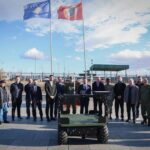
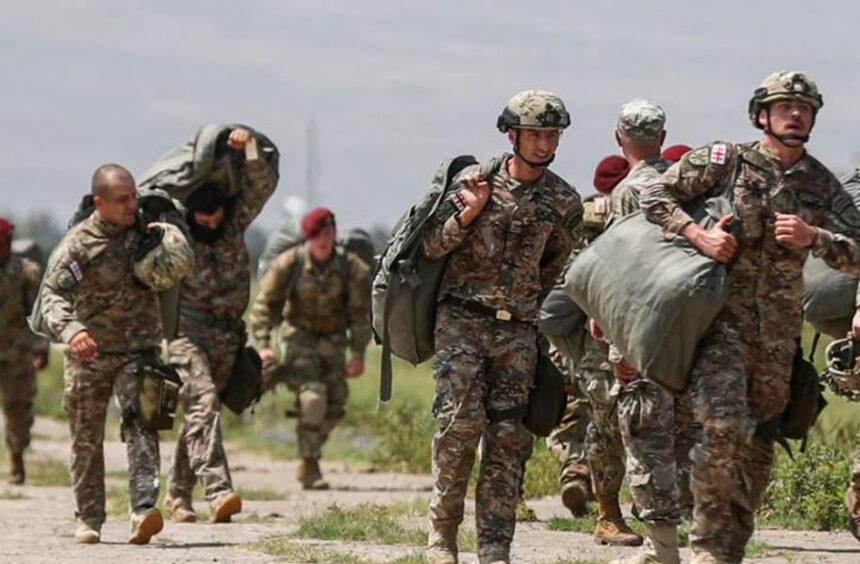
At the height of this cooperation, Georgia and Kazakhstan regularly hosted multinational military exercises, while US military bases operated in Uzbekistan and Kyrgyzstan.
Those exercises are no longer taking place, relations between Washington and Tbilisi are particularly strained, and the military bases were closed years ago. Nevertheless, security ties remain in place and continue to play a role.
NATO’s cooperation with Georgia includes cybersecurity, special forces and crisis management. Armenia and Azerbaijan have pursued more limited forms of cooperation, while Central Asian countries primarily use these partnerships for military education, professional training and diversifying their traditional security relationships.
“Countries would lose access to alternative military expertise, training networks, institutional reforms and Western standards,” Vakhtang Kapanadze, Georgia’s former Chief of General Staff and former military representative to NATO and the European Union, told Radio Free Europe/Radio Liberty (RFE/RL).
“Their main contribution lies in improving military professionalism, interoperability, defence planning, institutional resilience and the ability to cooperate with multiple international partners,” he added.
Kapanadze stressed that losing these ties would force the countries to seek alternative partners, potentially including Russia or China.
NATO’s Response: A Test of Credibility?
Asked by RFE/RL to comment on the reported demands from Moscow, a NATO official rejected them without directly mentioning Russia.
“Any decisions regarding the further development of these partnerships are the exclusive prerogative of NATO Allies and the respective partners,” the official said.
Kapanadze said he believes NATO will seek to uphold these principles, but added that its ability to do so depends on political unity, particularly between Washington and its European allies.
“Ultimately, NATO’s credibility depends on ensuring that smaller states are not treated as bargaining chips,” Kapanadze said.
“Any agreement affecting Ukraine, Georgia or other post-Soviet countries must directly involve those countries and respect their sovereign choices, particularly when the wider Black Sea region and Central Asia deserve no less strategic attention than the Baltic states.”
So far, governments across Central Asia and the South Caucasus have not publicly commented on the Russian document that became public.
It remains unclear whether Moscow formally communicated its position to these governments before reportedly circulating the negotiating document during peace talks between the United States, Russia and Ukraine in Abu Dhabi on November 10 and 11.
Analysts in Kyrgyzstan, a country closely tied to Moscow through trade and the Russian-led Collective Security Treaty Organization (CSTO), warned that the demands reportedly being put forward by Russia directly affect the region’s independence.
Kyrgyz political analyst Emil Joroev told RFE/RL’s Kyrgyz Service that the demands “undermine the sovereignty of Central Asian countries. First and foremost, this is an attempt to restrict their right to determine and formulate their own independent foreign policy and decide for themselves whom they wish to cooperate with.”
Joroev said he does not expect Kyrgyzstan or neighbouring countries to issue formal diplomatic protests. However, he argued that regional leaders should address Moscow directly during closed-door meetings at high-level summits.
“These issues should be raised precisely at those meetings, and it must be made absolutely clear that our countries will not accept such actions,” he said.
Bakyt Amanbaev, Kyrgyzstan’s former ambassador to the United States, went further, arguing that Moscow has no authority to dictate the region’s foreign partnerships and that remaining silent is not enough.
Speaking to RFE/RL’s Kyrgyz Service, Amanbaev said: “No country has the right to determine and direct the foreign policy of Central Asian states on their behalf.”
“It would be entirely appropriate for the foreign ministers of Central Asian countries to convene and express a clear and concrete position,” he added.