Serbia is once again expected to distance itself from a joint declaration at the EU–Western Balkans Summit, with disagreements over war crimes, sanctions against Russia and commitments towards Kosovo likely to prevent Belgrade from endorsing the document.
Senior EU officials familiar with preparations for the summit, scheduled for 25 November in Brussels, have indicated that Serbia is unlikely to agree to the final text. The development comes despite the country’s declared ambition to advance towards EU membership and renewed optimism in Brussels about relations with its incoming political leadership.
Among the provisions expected to cause disagreement are references to the glorification of war criminals, genocide denial and historical revisionism. The draft declaration describes these practices as incompatible with the fundamental values of the European Union and calls on Western Balkan countries to respect all victims and comply with rulings by international and domestic courts on war crimes.
The document is also expected to call for alignment with EU sanctions against Russia and the implementation of agreements reached in the dialogue between Kosovo and Serbia. These are longstanding demands from Brussels that Belgrade has yet to fully meet.
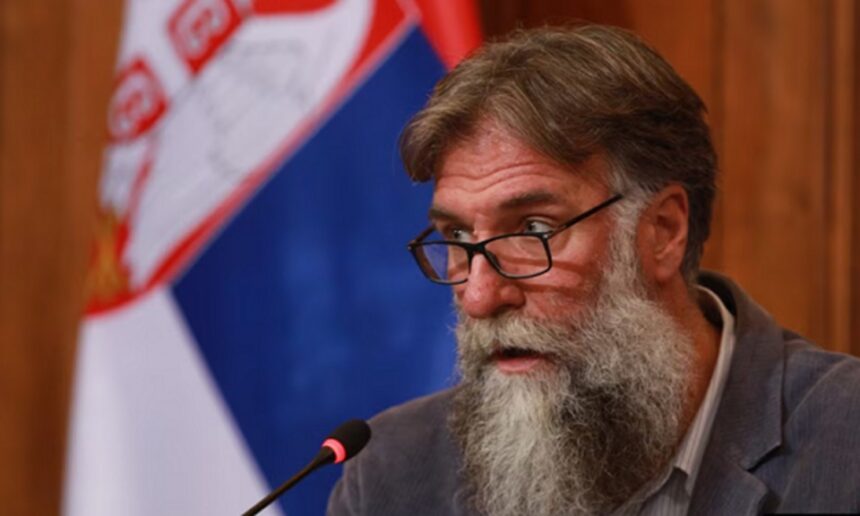
Serbia’s absence from the summit will be represented by its decision not to send acting President and Parliament Speaker Aleksandar Čupić. He has cited urgent developments in the Serbian Parliament as the reason for not attending. EU officials have described the decision as understandable in the context of the political transition in Belgrade.
However, the change in leadership does not alter the conditions Serbia faces on its path towards EU membership. Brussels expects the incoming authorities to make tangible progress on the rule of law, the fight against corruption, media freedom, foreign policy alignment and the normalisation of relations with Kosovo.
Serbia’s alignment with the EU’s Common Foreign and Security Policy stands at approximately 59 per cent, the lowest rate in the region, according to figures cited by EU officials. Its continued refusal to align with sanctions against Moscow remains a significant point of contention.
The Kosovo issue is equally central. The draft declaration is expected to underline that the lack of progress in normalising relations is holding back the European integration of both sides. EU leaders are also expected to insist on the implementation of all agreements reached through the dialogue, linking access to Growth Plan funding to constructive engagement.
Despite these unresolved issues, EU officials have expressed optimism about their future relationship with Serbia’s incoming authorities. European Commission officials consider that Cluster 3 of Serbia’s accession negotiations is technically ready to be opened, although member states have yet to reach an agreement.
The upcoming summit will mark the second consecutive occasion on which Serbia has declined to endorse the final declaration. In December last year, Aleksandar Vučić boycotted the meeting after Serbia failed to secure the opening of Cluster 3.
The repeated disagreements expose a persistent contradiction in Belgrade’s European policy: Serbia continues to pursue EU membership while resisting common positions on Russia, Kosovo and the legacy of war crimes. For Brussels, the challenge remains turning Serbia’s stated commitment to European integration into measurable political action.