A new disagreement has emerged between the European Union and the United States over the order in which key issues should be addressed in negotiations to end Russia’s war against Ukraine, particularly regarding when and how to discuss Europe’s post-war security architecture.
European leaders believe that discussing the broader European security framework before securing a ceasefire risks playing into Russia’s hands. They insist that Moscow must first agree to halt hostilities in Ukraine before wider security arrangements are negotiated.
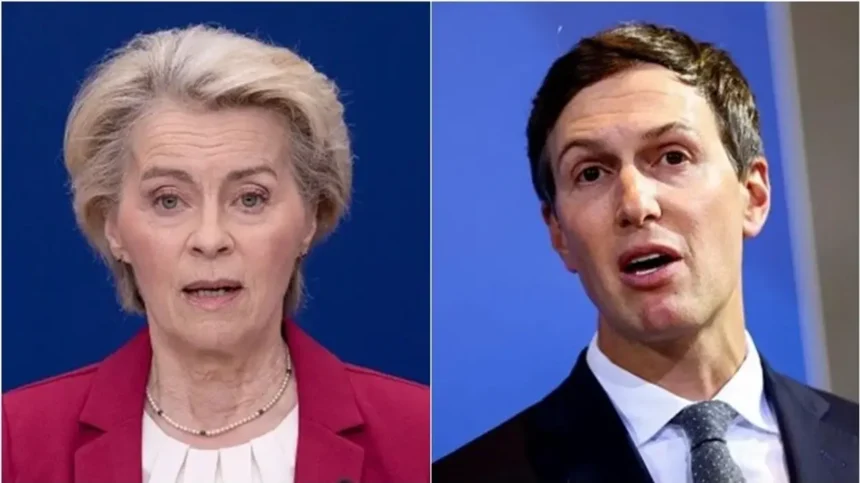
However, US special envoy Jared Kushner, who is involved in mediating the negotiations, has argued that the issue of Europe’s future security architecture must be addressed from the outset.
In a social media post, Kushner said Ukraine’s security guarantees could not be finalised separately from the broader post-war European security framework.
“Security guarantees for Ukraine cannot be finalised in isolation from the post-war European security architecture. Both must be considered together,” Kushner wrote.
Among the proposed guarantees is reportedly a provision modelled on Article 5 of NATO’s collective defence clause, which would provide Ukraine with protection in the event of another Russian attack.
Kushner warned, however, that US President Donald Trump would approve an Article 5-style guarantee only if broader security arrangements made the possibility of having to activate it extremely unlikely.
He argued that this was precisely why the issue needed to be on the negotiating table from the beginning, as part of a comprehensive agreement.
“Nothing is agreed until everything is agreed,” Kushner said.
His position differs from that of European Commission President Ursula von der Leyen and other European leaders, who believe Russia must first demonstrate a genuine commitment to peace by agreeing to a ceasefire.
European officials argue that Russia bears responsibility for undermining the European security order established after the Second World War through international treaties and agreements, which Moscow violated by launching its full-scale invasion of Ukraine.
Von der Leyen has maintained that discussions about Europe’s future security architecture depend on Russia first agreeing to stop the fighting and demonstrating a genuine willingness to pursue peace.
Asked about Kushner’s latest remarks, the European Commission gave no indication of a change in its position.
“Our position has not changed since last week,” chief spokesperson Paula Pinho told Euronews.
The disagreement highlights a growing difference in approach between Washington and European capitals over the framework for a potential peace settlement, particularly the relationship between a ceasefire, Ukraine’s long-term security guarantees and the future security order in Europe.