
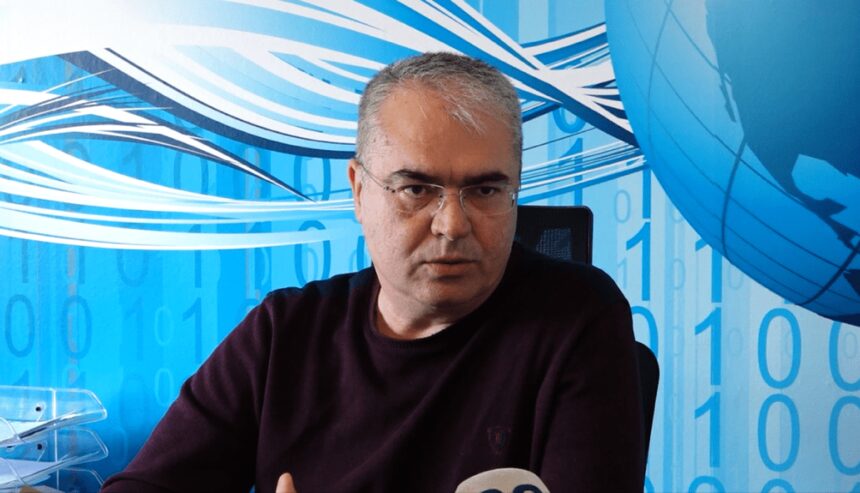
Arben Fetoshi, director of the Octopus Institute, has warned that Serbia’s Student List could pursue an even more confrontational foreign policy towards the West and Kosovo than that of outgoing President Aleksandar Vučić, despite the fact that a new government has yet to be formed.
In an analysis published on Monday, Fetoshi argued that political pressure on the Student List is already emerging during the initial stages of the country’s political transition. He particularly pointed to a demand by the Serbian National Council (SNV) to restore the so-called Ministry for Kosovo and Metohija.
According to Fetoshi, the organisation, which supported the Student List during the elections, is justifying the proposal as necessary to strengthen Serbia’s protection of its territorial integrity.
He noted that the SNV is led by Momir Stojanović, a former head of military security of the Priština Corps between 1996 and 1999 and former director of Serbia’s Military Intelligence Agency (VBA) in 2004. Fetoshi also referred to allegations linking Stojanović to war crimes surrounding the Meja massacre on April 27, 1999.
Fetoshi argued that the proposal to re-establish the ministry should not be viewed merely as an institutional restructuring initiative, but as political pressure aimed at legitimising an even more aggressive approach towards Kosovo and Serbia’s territorial claims.
He also connected the development to previous actions by the Serbian National Council, which, together with the SNF organisation and the Otadžbina Movement, filed a criminal complaint against Vučić, parliamentary speaker Ana Brnabić, Foreign Minister Ivica Dačić and officials Petar Petković and Goran Rakić.
The complaint accused the officials of harming Serbian interests in Kosovo. Fetoshi said this position aligns with the Student List’s pledges to prosecute representatives of the current government over agreements it considers unconstitutional and damaging to Serbia.
The analysis also draws parallels with political developments in Bosnia and Herzegovina, particularly the increasingly confrontational rhetoric of Republika Srpska leader Milorad Dodik.
Dodik recently threatened further institutional confrontation following a decision by Bosnia and Herzegovina’s Constitutional Court declaring invalid the veto exercised by Serb Presidency member Željka Cvijanović concerning appointments to the Commission for the Preservation of National Monuments.
“After a long and painful illness, Bosnia and Herzegovina died today. The crippled and illegitimate Constitutional Court has crossed all red lines,” Dodik wrote on X, warning that his patience had run out.
Fetoshi described Dodik’s rhetoric as a threat to the Dayton Peace Agreement and argued that it forms part of a broader political climate that could encourage a more confrontational approach by Serbia’s incoming political leadership.
He also highlighted similarities between Dodik’s positions and the Student List’s political programme, particularly their opposition to the powers of the international High Representative and the use of veto mechanisms to block institutional decision-making.
According to Fetoshi, these similarities could indicate continuity in political approaches that challenge Western influence and existing regional arrangements, rather than a genuine departure from the nationalist policies associated with the Vučić era.
He warned that such developments could have serious consequences for regional security, potentially undermining peace and stability across the Western Balkans.
The analysis raises questions about whether a change of government in Belgrade would translate into a meaningful shift in Serbia’s approach towards Kosovo and its Western partners, or whether the political forces emerging after Vučić would maintain, or even intensify, the same confrontational course.