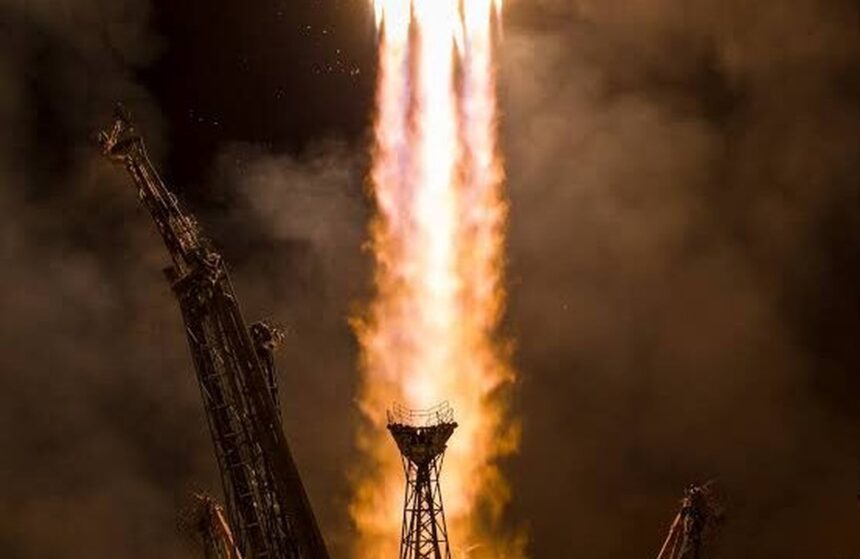
Reports emerged on November 23 that Russia is planning to launch a satellite equipped with a nuclear weapon, reportedly called Sputnik-S, “at any moment in the coming weeks”. For years, there have been suspicions that such a weapon has been kept in the Moscow region.
The Kremlin swiftly denied the claims, as concerns over the militarisation of space continue to grow.
Tomas Nagy, a senior researcher at GLOBSEC, a Slovakia-based security research institute, told Radio Free Europe that there is little evidence to confirm Russia is developing a nuclear weapon designed for use in space. However, if such a weapon has been developed, it could disable a large number of satellites, including the Starlink constellation.
“It would not necessarily destroy all satellites, but the impact would be indiscriminate: Western, Russian, Chinese and other countries’ spacecraft could all be affected by the destructive power of physics and radiation,” he said.
The main impact of a high-altitude nuclear explosion would come from the electromagnetic pulse (EMP), which travels outward from the blast at the speed of light, damaging electrical systems in its path. The radiation left behind in orbit could subsequently damage the sensitive components of satellites.
Victoria Samson, executive director for space security and stability at the Secure World Foundation, a US-based non-profit organisation, said that a high-altitude nuclear explosion would damage or completely disable a large number of satellites within its direct line of impact.
“Most satellites are not shielded against nuclear radiation, so, for example, if you get your internet through Starlink, that would likely no longer be an option under these circumstances,” she told Radio Free Europe.
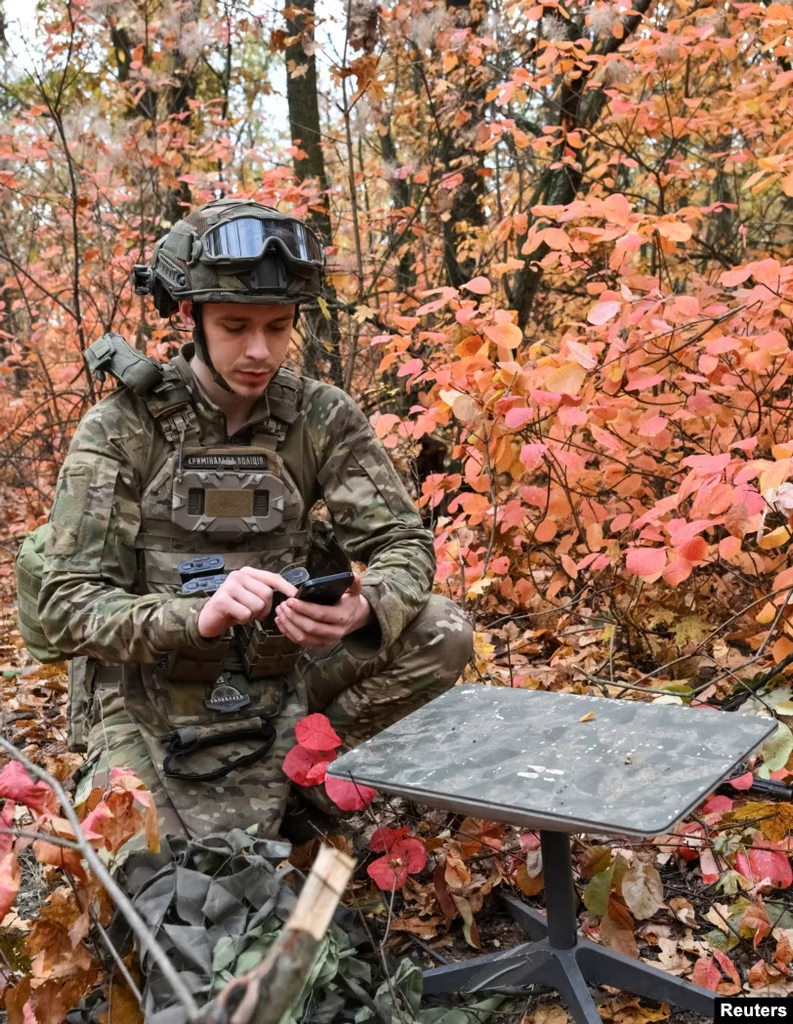
Ukraine relies heavily on the US-owned Starlink system to coordinate its forces on the battlefield during Russia’s invasion, which began in 2022.
On the ground, the same electromagnetic pulse could destroy electrical systems across vast areas, with consequences that remain unknown.
The Lessons of Previous Nuclear Tests in Space
A photograph from the US Department of Defense shows the Starfish Prime high-altitude nuclear test, conducted over the Pacific Ocean in 1962.
Both the United States and the Soviet Union detonated powerful nuclear weapons in space during tests in 1962. The explosions caused unexpected damage on Earth and led to a halt in further tests of this kind.
The most powerful US high-altitude nuclear test, codenamed Starfish Prime, took place on July 9, 1962, approximately 400 kilometres above the Pacific Ocean.
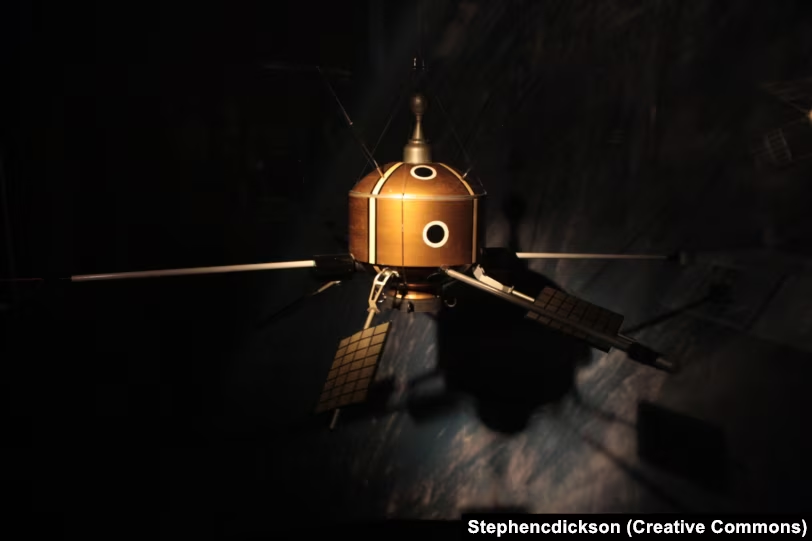
In the US state of Hawaii, more than 1,200 kilometres from the explosion, streets were plunged into darkness as streetlights went out. Air-raid sirens began sounding on their own, while hundreds of burglar alarms in Honolulu were triggered. Several of the dozens of satellites then in orbit were damaged or disabled by the explosion, including Ariel 1, Britain’s first satellite.
Several months later, in the Soviet Union, scientists observing the sky over Soviet Kazakhstan witnessed what one of them described as “a second sun”, which briefly illuminated the area.
The flash came from a Soviet nuclear weapons test designed to study the effects of high-altitude explosions on missile defence and communications systems. The bomb was 20 times more powerful than the one that destroyed Hiroshima.
A replica of Ariel 1, Britain’s first satellite, which was among several spacecraft damaged by the Starfish Prime explosion.
Observers in Kazakhstan felt nothing and heard no explosion, but the bomb’s electromagnetic pulse destroyed electrical systems in the area. Power lines sparked and caught fire, while their cables fell to the ground. A fire also broke out inside an electrical substation.
The electromagnetic pulse also disabled an underground power cable, buried approximately one metre below the surface, which supplied electricity to two cities. Much of the damage caused by Soviet EMP tests has never been made public.
In 1963, the United States, the United Kingdom and the Soviet Union ratified the Partial Test Ban Treaty, which prohibited nuclear explosions in space. A subsequent treaty banned the placement of nuclear weapons in orbit.
Today, it remains unclear how such a weapon would affect modern infrastructure, which relies far more heavily on sensitive electronic systems than it did in the 1960s, as well as the thousands of active satellites orbiting Earth.
“Essentially, if we had another explosion like Starfish Prime today, the impact on low Earth orbit would be even greater because there are far more satellites there, and they rely much more heavily on electronic components than they did in the 1960s,” Samson said.
A 2010 report examining the potential damage an electromagnetic pulse attack could inflict on satellites concluded that “uncertainties of one to two orders of magnitude are anticipated”, owing to the lack of modern data on electromagnetic pulses.
A Ukrainian soldier installs a Starlink antenna in Donetsk.
At a recent summit in New York, Palmer Luckey, an American weapons manufacturer, called for the resumption of nuclear testing, primarily to study the effects of electromagnetic pulses on modern infrastructure.
He also cited the outdated data collected during nuclear tests conducted decades ago as a reason for renewed testing.
“In the event of an electromagnetic pulse attack, we do not really know what will happen to our phones, our critical infrastructure or our military,” he said.