Kosovo’s caretaker Prime Minister Albin Kurti has secured a surprisingly decisive electoral victory, winning around 50 percent of the vote, according to an analysis by Germany’s public broadcaster ARD.
In a report published by Tagesschau, ARD notes that Kurti’s leftist-nationalist Vetëvendosje movement significantly increased its support, largely thanks to Kosovo Albanians from the diaspora who returned home during the winter holidays and participated in the vote.
Diaspora Played a Key Role
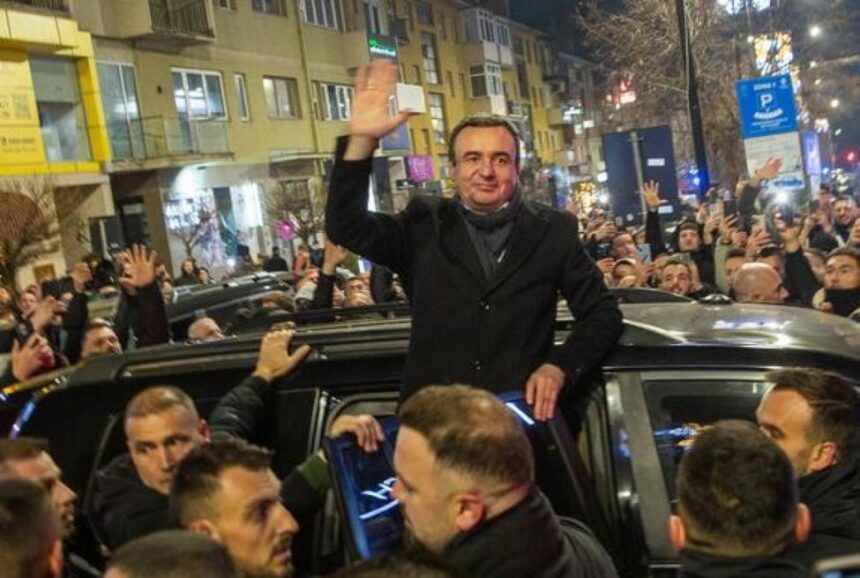
Supporters of Kurti and Vetëvendosje celebrated in central Prishtina, accompanied by traditional drums, wind instruments, and fireworks. Many celebrants were members of the diaspora from Switzerland and Germany, who combined family visits with participation in the parliamentary elections.
According to ARD, Kurti’s political opponents argue that the prolonged government crisis and delayed snap elections were no coincidence. They accuse him of intentionally extending the crisis until the end of the year, knowing that diaspora voters traditionally support his party in large numbers.
Sharp Increase in Vote Share
The results represent a remarkable surge in support for Vetëvendosje. In the February parliamentary elections, the party won around 42 percent, while the latest vote puts it close to 50 percent.
This outcome effectively ends a government crisis that lasted more than ten months, as Kurti is no longer dependent on Kosovo’s three main opposition parties – PDK, LDK, and AAK – to shape the political agenda.
Kurti Calls for Selective Cooperation
In his victory speech, Kurti appeared confident and upbeat, thanking citizens and institutions for organizing what he described as “a fair, democratic, and free electoral process.”
He emphasized that Vetëvendosje emerged stronger than in the previous elections and expressed readiness to cooperate with the opposition on key international agreements requiring a two-thirds parliamentary majority.
These include €880 million from the EU Growth Plan and €120 million from three agreements with the World Bank.
Minority Votes Still Crucial
Despite the strong showing, Kurti cannot govern alone. Kosovo’s electoral system reserves 20 out of 120 parliamentary seats for minority communities – 10 for Kosovo Serbs and 10 for other minorities, including Bosniaks, Turks, and Roma.
ARD notes that Kurti is unlikely to receive support from Serb representatives, given his previous actions against Serbian administrative structures in Kosovo and police interventions in Serb-majority areas. However, non-Serb minority MPs are considered more open to cooperation.
Opposition Parties Suffer Heavy Losses
The biggest losers of the election were Kosovo’s opposition parties, particularly the Democratic League of Kosovo (LDK). The liberal-conservative party dropped from 18 percent to below 14 percent.
LDK leader Lumir Abdixhiku acknowledged the defeat, stating:
“The citizens of Kosovo have spoken, and it is our duty to listen.” He added that he takes responsibility for the result.
Months of Political Deadlock
For nearly a year, LDK, PDK, and AAK were locked in a power struggle with Kurti, marked by deep mistrust and the absence of serious coalition negotiations. The election of the parliamentary speaker failed more than 50 times, highlighting the extent of the institutional paralysis.
The opposition accuses Kurti of authoritarian tendencies, poor economic governance, and excessive concentration of power. Kurti, in turn, has repeatedly described the opposition as representatives of a corrupt old elite acting destructively out of political jealousy.
A Stronger Mandate Ahead
According to ARD, Kurti is now well-positioned to form a more stable government, one in which he will clearly set the political tone, marking a decisive shift in Kosovo’s post-election landscape.