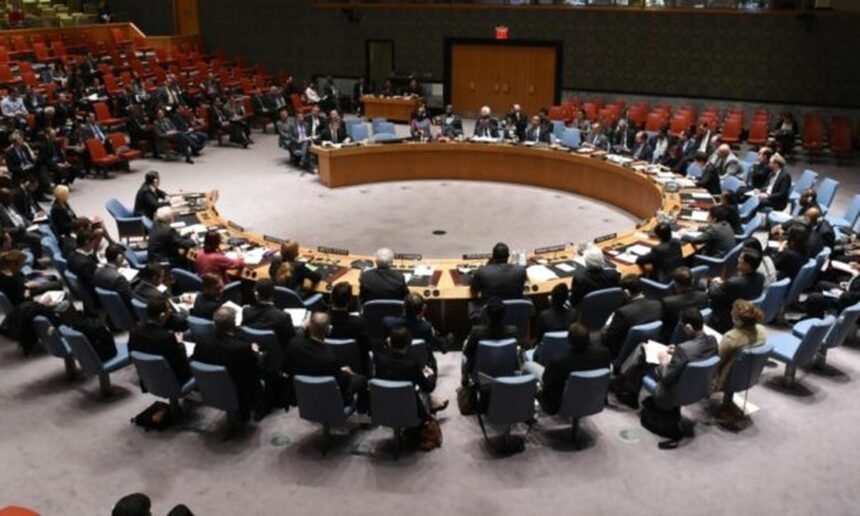
The new Secretary-General of the United Nations will be elected this year for a five-year term starting January 1, 2027.
The President of the 193-member General Assembly, Annalena Baerbock, requested on Wednesday that countries submit their nominations by April 1, so candidates can participate in the so-called interactive dialogues during the week of April 20, which will be broadcast online.
During these meetings, candidates will present their vision statements, and UN member states will have the opportunity to ask questions.
When Does the Process Begin?
The race officially began on November 25 when the 15-member Security Council President and the General Assembly President sent a joint letter requesting nominations. A candidate must be nominated by a UN member state.
Traditionally, this position rotates among regional groups. When António Guterres from Portugal was elected in 2016, it was Eastern Europe’s turn, followed by Latin America. However, some diplomats anticipate candidates from other regions as well.
Who Are the Candidates?
So far, one candidate has been officially nominated: Rafael Grossi. The Argentine diplomat, who is currently the Director General of the International Atomic Energy Agency (IAEA) since 2019, confirmed on September 3 that he would run. Argentina officially nominated him on November 26, 2025.
Other publicly declared candidates not yet formally nominated include:
- Michelle Bachelet – Chile plans to nominate its former president, Bachelet, who also served as UN High Commissioner for Human Rights (2018–2022) and Executive Director of UN Women (2010–2013).
- Rebeca Grynspan – Costa Rica will nominate its former vice president, Grynspan, currently Secretary-General of the UN Conference on Trade and Development.
The Security Council will officially recommend one candidate to the 193-member General Assembly later this year.
How Is the Secretary-General Elected?
The Security Council holds secret “straw polls” until a consensus is reached. Members can vote: encourage, discourage, or no opinion.
The five permanent members with veto power – the USA, Russia, UK, China, and France – must agree on a candidate. The Security Council then approves a resolution recommending the candidate to the General Assembly, requiring at least nine affirmative votes and no vetoes.
The General Assembly’s approval is considered a formal confirmation.
How Transparent Is the Process?
The UN has worked to improve the transparency of this historically opaque process. A resolution passed in September 2025 requires:
- Candidates to submit a vision statement, which must be publicly available online.
- Disclosure of funding sources, and UN officials running must consider temporarily suspending their duties to avoid conflicts of interest.
What Does the Secretary-General Do?
The UN Charter calls the Secretary-General the “chief administrative officer” of the organization. Their role is described as diplomat, advocate, civil servant, and executive director.
Currently, Guterres oversees thousands of civilian staff and 11 peacekeeping operations. The UN’s core budget is $3.45 billion, with the peacekeeping budget at $5.4 billion.
Although the Security Council authorizes military action and sanctions, the Secretary-General’s power is largely diplomatic, with permanent members preferring a “secretary” over a “general.”
Has a Woman Ever Been Secretary-General?
No. There is growing momentum to elect the first female Secretary-General in the UN’s 80-year history. The September 2025 resolution emphasized regret that no woman has ever held the position and encouraged member states to strongly consider women candidates.