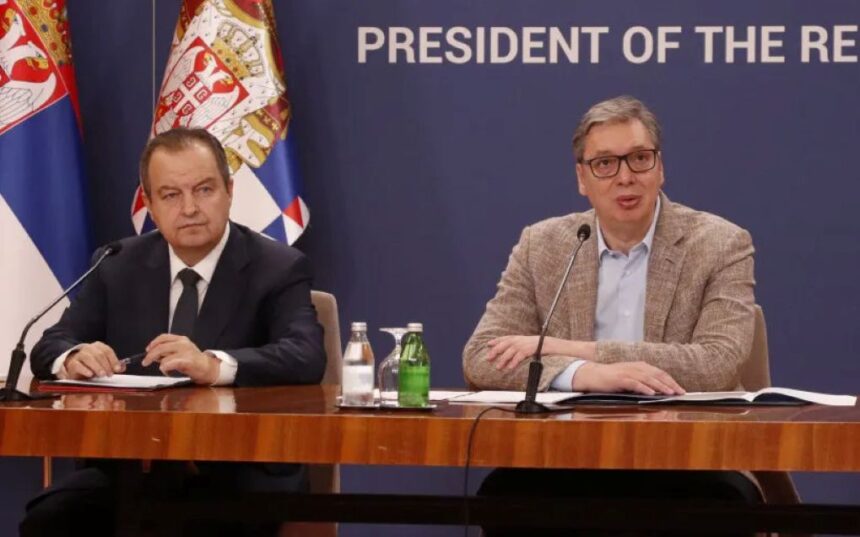
A case of extreme police violence in Serbia, dating back to 2014, has once again drawn attention to what critics describe as the systemic collapse of the rule of law under the regime of President Aleksandar Vučić and Interior Minister Ivica Dačić.
Lazar Ludajić, today living in Germany, narrowly survived a near-fatal beating by off-duty police officer Velimir Ilibašić in a Belgrade restaurant. More than a decade later, Ludajić remains permanently injured, while Ilibašić continues his police career — now serving as the personal escort of Interior Minister Ivica Dačić.
A Brutal Assault, Minimal Punishment
The attack occurred in June 2014 at the Time Out restaurant on Ada Ciganlija. Ludajić was beaten so severely that his spleen had to be surgically removed, and doctors stated that a delay of just minutes could have cost him his life.
Despite the gravity of the assault, Serbian courts sentenced Ilibašić to only six months of house arrest, without electronic monitoring. Instead of being dismissed from the police force, he remained in service and later advanced to a position of trust within the Ministry of Interior.
Intimidation Inside Police Headquarters
Perhaps most alarming was what followed. During a police interview, Ilibašić entered the room, removed his coat, and placed a handgun on the table in front of Ludajić, while mocking his testimony. Senior officers present failed to intervene, reinforcing claims that internal police oversight in Serbia is either dysfunctional or deliberately compromised.
A System That Protects the Perpetrators
Ludajić’s experience is widely seen as emblematic of a broader pattern:
- Police officers enjoy de facto immunity,
- Political loyalty outweighs accountability, and
- Victims are left without justice.
Under the leadership of Vučić and Dačić, critics argue that state institutions have been captured, transforming the police from a public service into a tool of political power and protection for regime insiders.
Forced Into Exile
Unable to find justice or safety, Ludajić ultimately left Serbia, rebuilding his life in Germany. Years later, seeing his attacker publicly accompanying the interior minister prompted him to speak out for the first time, highlighting what he called a state that has “gone offside” — morally, legally, and institutionally.
A Chilling Message to Society
Human rights advocates warn that cases like this send a dangerous message:
violence is tolerated, even rewarded, when committed by those loyal to power. For many citizens, the distinction between criminals and police officers has become increasingly blurred, eroding public trust and democratic norms.
As Serbia continues to claim commitment to European values, cases such as this raise serious questions about accountability, justice, and the true cost of political stability under authoritarian governance.