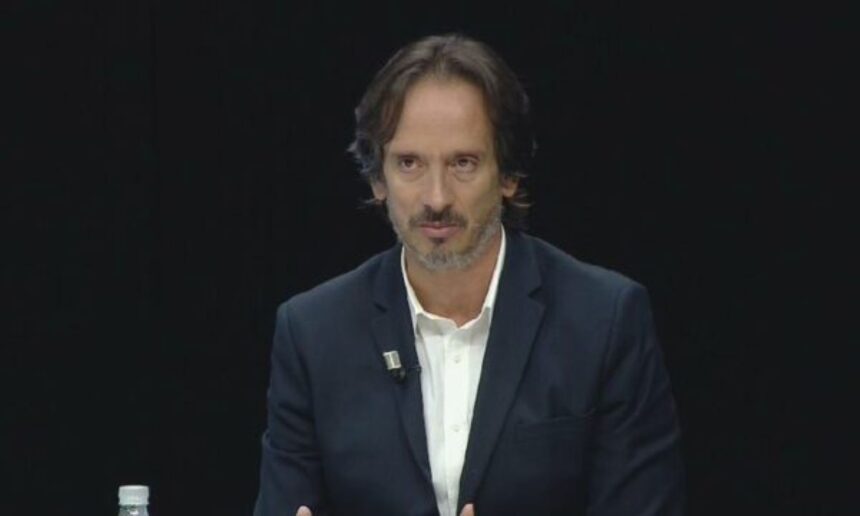
Albanian publicist Ben Andoni says the first-instance convictions of four former Kosovo Liberation Army (KLA) leaders, despite the disappointment they have caused in Kosovo, have not undermined what he describes as the “purity” of the KLA’s war.
In an interview with Gazeta Express, Andoni said the judgment had instead created a responsibility for Kosovo’s institutions and academics to develop a comprehensive and historically grounded account of the 1998–1999 war.
“The task now lies with the Academy of Sciences and other institutions, which must address such a difficult national task concerning the historical narrative,” Andoni said.
He warned, however, that the response to the verdict could influence Kosovo’s domestic political environment and its relations with Serbia.
Andoni: Kosovo needs a mature legal strategy
Andoni said the most important challenge now concerns the legal arguments that the defense teams will develop in the appeals process.
“The biggest challenge will be the legal maturity and the arguments that the defense will generate to seek the overturning of the convictions or the reduction of the sentences,” he said. “So far, there has only been noise.”
He argued that testimony from senior former U.S. officials had been significant for the defense, while also emphasizing that parts of the prosecution’s case relied on testimony from Kosovo Albanians.
According to Andoni, the statements of American officials regarding the KLA’s command structure and the wider war had been important elements of the defense strategy.
Calls for Kosovo-Albania coordination
Asked about calls for a joint strategy by Kosovo and Albania in response to the verdict, Andoni said the two countries were “very late” in developing such an approach.
He criticized what he described as the personal political protagonism of Albanian Prime Minister Edi Rama and Kosovo Prime Minister Albin Kurti, arguing that it had hindered the development of a coordinated state-level position.
Andoni also referred to statements by Kosovo officials, including President Vjosa Osmani and former Foreign Minister Donika Gërvalla, concerning the defendants, saying these had contributed to the difficulties surrounding political support for them.
He argued that Kosovo and Albania should have developed a common strategy much earlier and that officials from both countries should have maintained coordinated positions.
“That cooperation has been absent for some time, and we saw the consequences in the trial as well,” he said.
Andoni added that developing such a strategy now would require significant legal expertise and institutional coordination, and should extend beyond the courtroom.
Concerns over Kosovo’s political and institutional development
Beyond the Specialist Chambers proceedings, Andoni said he believed Kosovo faced broader challenges in strengthening and consolidating its state institutions.
He argued that the country’s political environment was making that process more difficult, while warning that Serbia could use disagreements and competing narratives surrounding the verdict in its own political messaging.
He also said Kosovo would need to respond to the verdict through legal arguments rather than emotional or rhetorical reactions.
Comments on Vlora Hyseni case
In the final part of the interview, Andoni discussed the case involving Vlora Hyseni, the head of Albania’s State Intelligence Service (SHISH) and a former deputy head of Kosovo’s intelligence agency, the Kosovo Intelligence Agency (AKI).
Hyseni has been placed under house arrest as part of an investigation by Albania’s Special Prosecution Office. The allegations against her remain subject to judicial proceedings, and she is presumed innocent unless proven guilty.
Andoni said the case raised concerns about institutional vulnerabilities in both Albania and Kosovo, while stressing that Hyseni’s legal status should not be prejudged.
He argued that the episode highlighted what he considers to be weaknesses in relations between the two countries and questioned the decision to appoint Hyseni to a senior position in Albania after her departure from Kosovo’s intelligence structures.
Andoni’s comments on the case represent his personal assessment and do not establish any wrongdoing by Hyseni.