
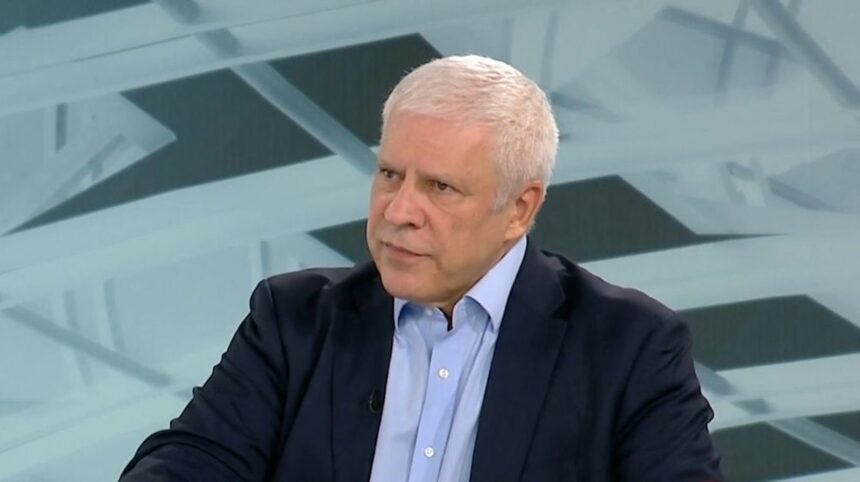
Former Serbian president and Democratic Party (DS) leader Boris Tadić has published a lengthy analysis criticizing Aleksandar Vučić’s behaviour as an opposition leader following the defeat of the Serbian Progressive Party (SNS) in the October 25 elections, won by the Students’ List.
In a statement published on the social media platform X, Tadić accused Vučić of continuing the same political rhetoric and methods he had used during his years in power, particularly by portraying himself as a victim and accusing his political opponents of persecution.
Tadić said he was particularly concerned by Vučić’s repeated claims in parliament that the Students’ List was engaging in political terror, arguing that the new government had not even been formed yet.
He claimed that the accusations reflected methods previously associated with the SNS, which, according to him, were now being used internally following the party’s electoral defeat.
Tadić also recalled the period after the SNS came to power in 2012, accusing the new authorities at the time of launching politically motivated investigations and prosecutions against dozens of former Democratic Party officials.
He alleged that several individuals were subjected to fabricated legal proceedings and were eventually acquitted, but that the cases had already caused serious damage to their personal and professional lives. He also referred to the late Dragan Vujadinović, former mayor of Kosjerić and MP, whose life, he claimed, was affected by the circumstances surrounding the political persecution.
The former president further accused Vučić’s government of weakening the opposition through changes to political party financing legislation and subsequently undermining democratic competition in Serbia.
Tadić accuses Vučić of undermining media freedom
A significant part of Tadić’s criticism focused on media freedom. He rejected Vučić’s claims that the previous government had not shut down media outlets, arguing that the SNS administration had effectively transformed much of the country’s media landscape into party-controlled platforms.
He also accused the authorities of interfering in editorial policies and exerting pressure on independent newsrooms.
Commenting on the recent incident involving an intrusion into the offices of the pro-government outlet Informer, Tadić contrasted it with what he described as years of pressure on media organizations across Serbia.
He argued that the public had yet to hear the full extent of what opposition figures experienced after the SNS came to power in 2012.
Tadić said that a political transition should eventually allow citizens to learn more about alleged abuses and political pressure that, according to him, remained hidden behind the government’s propaganda.
In one of the most striking passages of his statement, he drew comparisons between recent incidents and the political climate under Vučić’s government, writing: “Where there is yoghurt today, there was blood and smashed heads.”
He also contrasted the recent disruption at Informer with what he described as the systematic destruction of media freedom, and said Vučić had previously tolerated far greater levels of hostility towards political opponents than he now appeared willing to accept.
Tadić concluded by saying that every false claim made by Vučić should be challenged, not for the sake of the former president himself, but for citizens who continue to believe his statements and, according to Tadić, have not had access to alternative accounts of Serbia’s recent political history.
His remarks come amid heightened political tensions following the October 25 election defeat of the SNS and the emergence of the Students’ List as the winning political force.