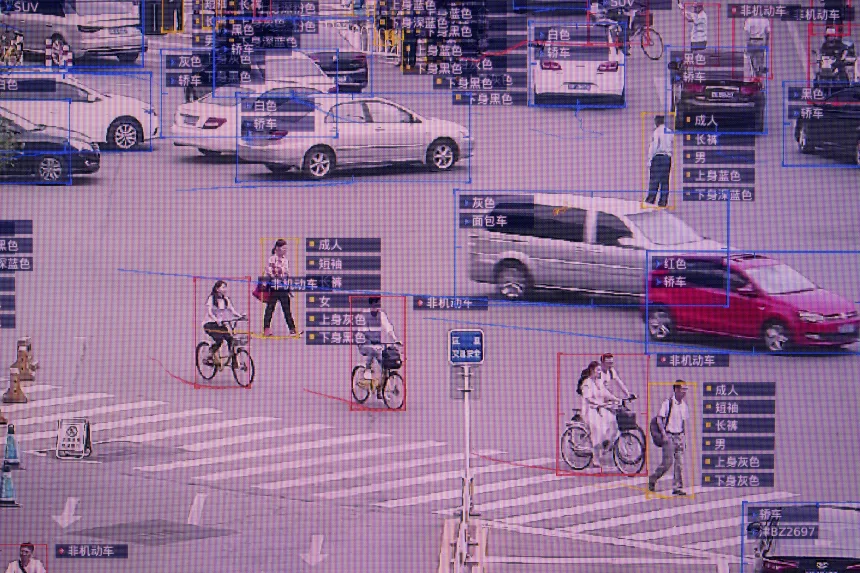
The Chinese Communist Party (CCP) is rapidly expanding its use of artificial intelligence (AI) to monitor and control its population, deploying technologies capable of predicting protests, tracking communications, and analyzing the emotional states of prisoners, according to a new report by the Australian Strategic Policy Institute (ASPI).
The report highlights that Beijing has implemented advanced systems that automate censorship, increase surveillance, and suppress dissent before it emerges, making AI “the backbone of authoritarian governance.” Analysts warn that these technologies allow large-scale monitoring with minimal human involvement.
Nathan Attrill, co-author of the ASPI report, notes that AI now enables China to monitor more people, more closely, and with less effort, consolidating the Communist Party’s domestic control while exporting surveillance technologies to extend global influence.
Expanding Surveillance: From Public Spaces to Smart Prisons
China operates one of the world’s largest surveillance camera networks, with approximately 600 million cameras, or roughly three cameras for every seven people. Many cameras use facial recognition and behavioral analysis to detect gatherings, track movements, and alert authorities to “suspicious” activity.
AI systems are also integrated into courts, recommending arrests and sentencing decisions, while “smart prisons” monitor inmates’ emotions, such as anger, and use VR-assisted therapy technologies. The report emphasizes that some individuals can now be tracked, processed, and sentenced entirely through an AI-powered chain, from surveillance cameras to AI-equipped courts and digital prisons.
Vulnerable groups, including Uyghurs, Tibetans, and political dissidents, face the highest risks, with AI increasingly able to monitor minority languages and communications.
Tech Giants as Instruments of State Control
Chinese companies are central to this system:
- ByteDance filters political content on Douyin.
- Tencent assigns “risk scores” based on user behavior online.
- Baidu provides content-moderation tools and cooperates with authorities in criminal cases.
These technologies are already exported to other authoritarian regimes, expanding Beijing’s international influence.
Towards a National AI-Control System
Experts warn that these AI-powered systems are no longer experimental. They are being rapidly implemented and are expected to become national standards as China completes its digital infrastructure.
ASPI concludes that while AI can have positive applications, in an authoritarian context it becomes a powerful tool of repression and human rights abuse.