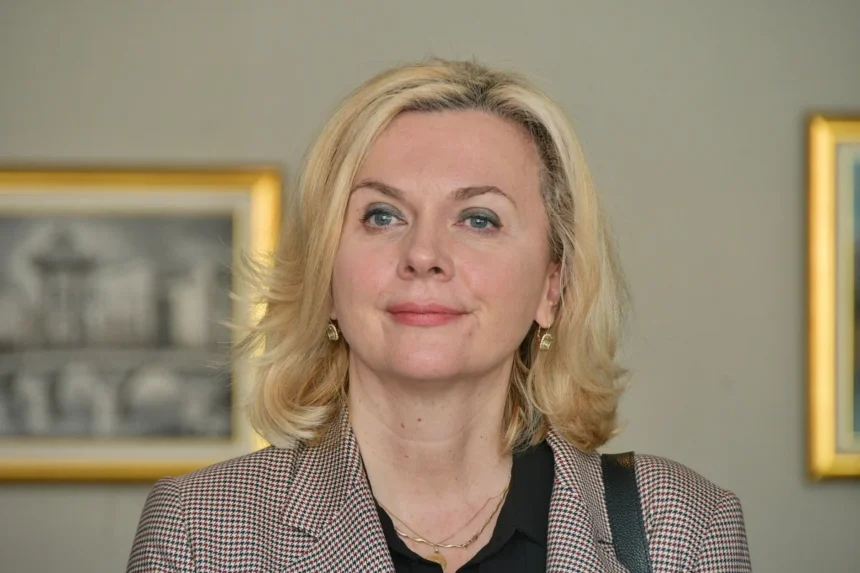
Croatian Member of the European Parliament Željana Zovko has drawn parallels between Croatia’s experience during the 1990s war and Ukraine’s ongoing struggle against Russian aggression, accusing Serbia’s Students’ List of following a pattern of historical revisionism similar to Russia’s information warfare.
Speaking as the European Parliament marks the 35th anniversary of the fall of Vukovar, and ahead of a vote on a resolution dedicated to the city, Zovko said Croatia had defended its right to freedom, while Ukraine is fighting for the same right today.
“Croatia defended its right to freedom, and today Ukraine is defending that same right,” Zovko said.
She argued that both cases reflect a pattern in which perpetrators first commit aggression and subsequently deny responsibility for crimes.
Her remarks were directed at a statement by Serbia’s Students’ List, which has rejected the resolution scheduled for a vote in the European Parliament.
Zovko also stressed that families of people who went missing during the war in Croatia are still waiting to discover the fate and whereabouts of their loved ones.
“In this attempt to rewrite the past, we recognise the same pattern of cognitive warfare that Russia is conducting against Ukraine today,” she said, adding that Croatia knows how long the consequences of such policies can last.
The proposed resolution marking the 35th anniversary of Vukovar’s fall and destruction was initiated by Croatian MEPs Karlo Ressler, Tonino Picula, Stjepo Bartulica and Gordan Bosanac.
It is the first resolution dedicated to the suffering of Vukovar to be considered by a European or international institution.
Two proposals were initially submitted. However, after the Renew Europe group, led by Austrian MEP Helmut Brandstätter, backed the Croatian lawmakers’ initiative, a joint text was negotiated, incorporating five amendments and securing the support of five political groups.
The resolution calls on Serbia to provide access to wartime archives, disclose information about the locations of individual and mass graves, strengthen cooperation in locating missing persons and ensure the prosecution of war crimes.
If adopted, the resolution will represent the European Parliament’s political position but will not be legally binding.