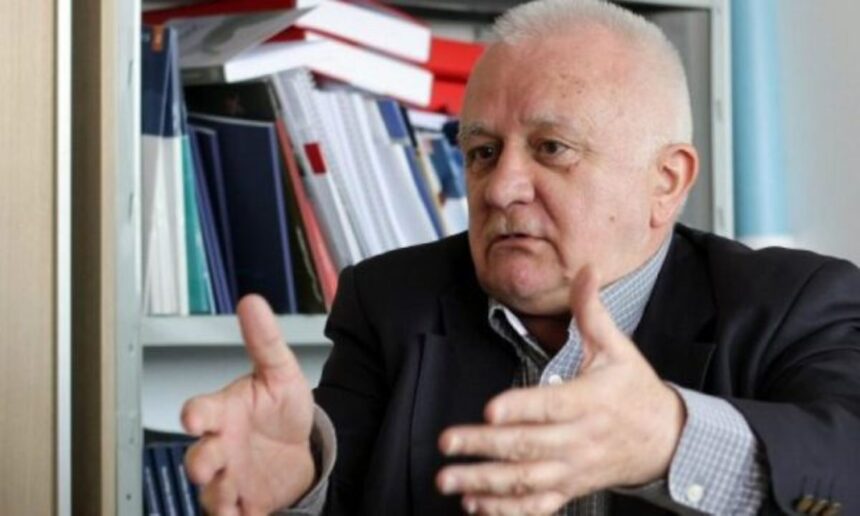
The agreement reached by Albanian political parties in southern Serbia to run together in the upcoming parliamentary elections represents a “good political step,” according to Dušan Janjić of the Forum for Ethnic Relations in Belgrade.
Speaking to Radio Free Europe, Janjić said the agreement could help Albanian parties secure the maximum possible number of votes.
He suggested that the political authority of Kosovo Prime Minister Albin Kurti may have contributed to reaching the agreement.
Janjić also said that if the October elections produce a narrow result between Aleksandar Vučić’s “United Serbia” list and the student-backed “Students Win” list, the Albanian minority could have greater influence over decisions about which political bloc to support.
According to Janjić, the parties that have previously cooperated with Serbia’s authorities carried the “greatest burden” in reaching the agreement.
At the same time, he said Albanians in Serbia cannot obtain guaranteed parliamentary seats in the same way that Serbia’s Serb community has reserved seats in Kosovo, as proposed by Kurti.
Janjić noted that Albanians in Serbia already have a National Council.
“If guaranteed seats were determined based on population size, Albanians would receive no more than three. The guaranteed-seat model is intended for smaller communities, such as Poles, Slovaks and Croats, and is based on interstate agreements,” Janjić said.
He also said that Serbia’s Albanian minority maintains communication with Kosovo because it considers Kosovo its “mother state,” while, according to him, Serbia’s authorities consider Albania to be the mother state of Albanians in Serbia.
This is not the first time that political actors from Kosovo or Albania have helped facilitate an agreement among Albanian parties from southern Serbia.
In 2020, political representatives from the three municipalities in southern Serbia signed an agreement in Tirana on joint participation in Serbia’s upcoming parliamentary elections. The agreement was signed in the presence of Albania’s then-acting Minister for Europe and Foreign Affairs, Gent Cakaj.