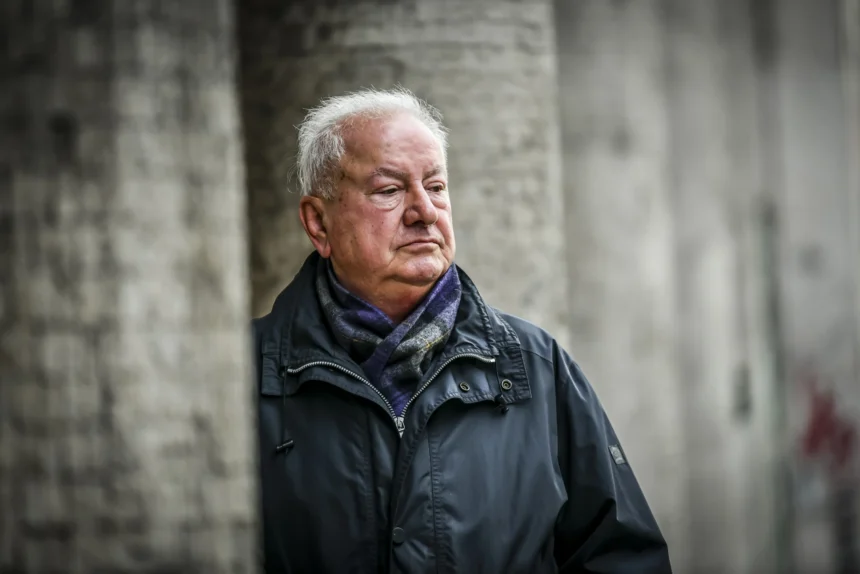
Veteran Serbian economist and philosopher Miodrag Zec has drawn a stark parallel between the authoritarian practices of socialist Yugoslavia and today’s Serbia under President Aleksandar Vučić, warning that the country is repeating its darkest historical patterns — this time by targeting students instead of professors.
In a wide-ranging interview, Zec recalled his arrest in December 1985, when Yugoslav state security detained him and several colleagues for alleged “subversion.” Four decades later, he says, the logic of repression remains unchanged, even though the targets have shifted.
“Back then, the regime arrested professors. Today, it arrests students. The justification is the same: silencing those who think differently,” Zec said.
From One-Party Repression to Personalized Power
According to Zec, Vučić’s system represents a modernized version of authoritarian rule, where institutions formally exist but real power is concentrated in one man’s hands.
“A legal state cannot exist without separation of powers. Vučić, who presents himself as a top law student, has done the opposite — he has absorbed all power into himself,” Zec stated.
He argues that absolute power inevitably brings absolute responsibility, and that the ruling elite around the president is already quietly preparing for a post-Vučić future as demographic and political trends turn against him.
Students Demand Justice, Not Privileges
Zec expressed strong support for the ongoing student protests, describing them as the most mature civic movement Serbia has seen in decades.
“For the first time, students are not asking for stipends or benefits. They are saying: forget money — give us justice,” he said.
According to Zec, this shift exposes the moral bankruptcy of the ruling system, which he says thrives on corruption, incompetence, and political loyalty rather than knowledge and merit.
“We are more hungry for freedom than for bread,” he added.
A State That Treats Citizens as Subjects
Zec sharply criticized Vučić’s governing style, accusing him of turning the state into a personal instrument of control rather than a service to citizens.
“This government does not understand that humiliated people cannot be creative. It only cares about who holds the ladle — not that ceilings collapse, roads fail, and public infrastructure literally falls apart,” he warned.
He compared today’s Serbian intelligence services to the former Yugoslav secret police, arguing that their primary function remains intimidation, surveillance, and denunciation of dissent.
Education Under Systematic Attack
One of Zec’s most serious accusations concerns the deliberate destruction of public education, which he describes as the most dangerous policy pursued by Vučić’s government since the 1990s.
“If you want to destroy a nation, first destroy its education. That directive is being implemented perfectly,” Zec said.
He criticized efforts to divert public funds from state universities to politically connected private institutions, warning that Serbia is replacing knowledge with purchased diplomas and loyalty-based appointments.
Vučić’s Legacy: Not Progress, but Control
Zec dismissed government megaprojects such as Belgrade Waterfront, Expo plans, and national stadiums as politically hollow and historically irrelevant.
“History does not remember rulers by propaganda projects. It remembers them by institutions, values, and freedom,” he said.
Instead, Zec argued, Vučić risks being remembered for turning central Belgrade into a zone of intimidation, referring to protest encampments and pro-government structures as a paramilitary caricature of civic life.
A Warning from History
Drawing on historical parallels, Zec warned that no ruler escapes the record of their own words and actions, especially in the digital age.
“Google remembers everything. Archives can no longer be burned. Spin dictatorship eventually collapses under the weight of its own contradictions,” he said.
He concluded with a bleak but firm message: power built on fear, propaganda, and repression cannot outlast a generation that refuses to leave and refuses to be silent.
Key Takeaway
Serbia is not facing a generational rebellion over money — it is facing a moral revolt against a system that has hollowed out justice, institutions, and education.