Following the protest held by workers of the Kosovo Energy Corporation (KEK), the institution has announced that it will continue regular and constructive communication with union representatives in order to address all employee demands.
In a press release, KEK clarified that regarding the 13th salary and wage increases, this is currently not possible.
“Regarding the request for the 13th salary and wage increases, it was clarified that this year KEK implemented the turbine modernization project, a process that lasted about five months,” the statement said.
“As a result, this project directly affected the corporation’s revenues. Consequently, the current financial situation and legal framework do not allow approval of this request, despite our willingness to consider it seriously,” KEK explained.
This position was communicated after a meeting held Thursday evening between the board and KEK management.
“During the meeting, union representatives requested that employees be informed in more detail about the corporation’s real financial and operational situation. In this regard, it was emphasized that in addition to health insurance and a dignified meal allowance, the process of assessing workplace risk — a costly process — will soon be completed, benefiting all employees according to the evaluation of their work positions,” the statement continues.
Meanwhile, the board and management recommended that social dialogue remain the only sustainable and effective mechanism to address and resolve workers’ demands represented by both unions.
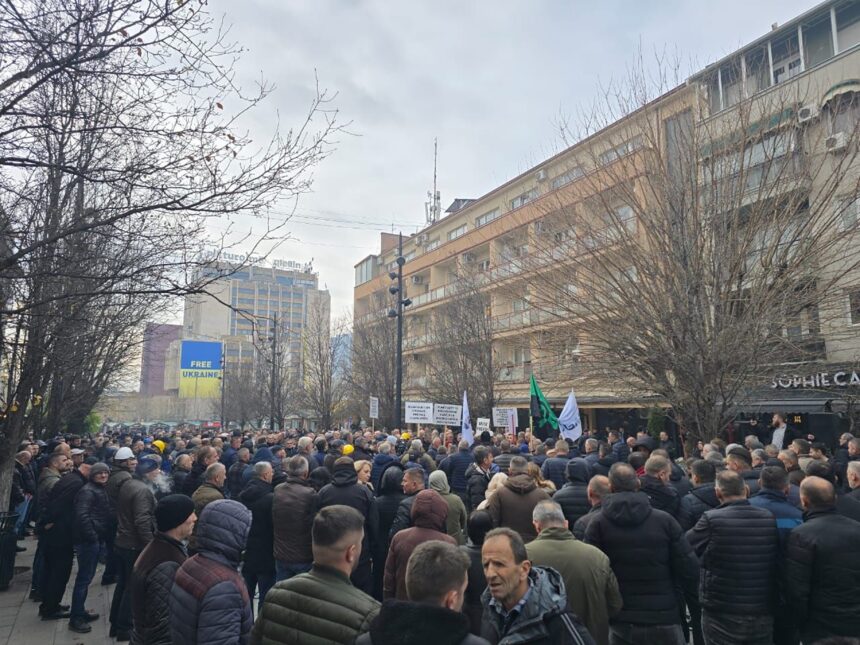
KEK workers held a protest on Friday in front of the corporation’s offices in central Prishtina. Their main demands included wage increases, wage equalization for physical security staff, and implementation of the 13th salary.
Workers urged KEK management to take urgent steps to improve working conditions and fully respect collective contracts and labor laws. Holding banners and voicing clear demands, they called for workplace risk to be recognized and compensated.