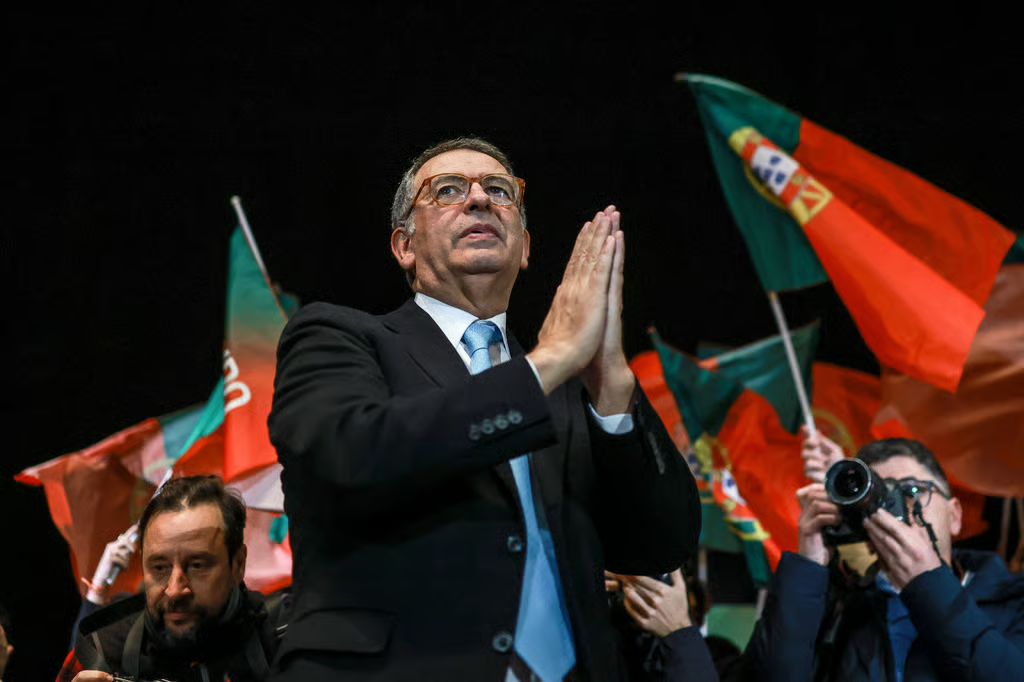
Portugal’s leading center-right political figures have taken the unusual step of endorsing a center-left presidential candidate in an effort to prevent the rise of the ultranationalist Chega party ahead of the Feb. 8 presidential runoff.
Several prominent conservatives have publicly backed António José Seguro, a former secretary general of the Socialist Party, as a collective rejection of far-right contender André Ventura, leader of Chega, who finished second in the first round of voting in January.
Despite polls indicating Ventura has little chance of winning, conservative leaders say their endorsement is intended to underscore a commitment to democratic values and political moderation.
Among those supporting Seguro are former President and Prime Minister Aníbal Cavaco Silva, former Deputy Prime Minister Paulo Portas, and Lisbon Mayor Carlos Moedas, a former European commissioner. In addition, thousands of voters have signed an open letter backing Seguro, issued by a group of self-described “non-socialist” public figures.
Ventura secured nearly 25 percent of the vote in the first round, highlighting Chega’s rapid ascent. The party has expanded from a single parliamentary seat to becoming Portugal’s main opposition force within six years, campaigning on anti-immigration rhetoric, attacks on minority groups, and accusations of systemic corruption.
Political consultant Henrique Burnay, a signatory of the open letter, said the election represents “a red line between liberal and illiberal forces,” warning that the radical right poses a serious threat to democratic norms.
Similarly, Luís Marques Mendes, a former center-right presidential candidate, announced his support for Seguro, describing him as the candidate closest to democratic principles, moderation, and inclusive representation.
Prime Minister Under Pressure
The growing conservative support for Seguro has placed Prime Minister Luís Montenegro under pressure, as he has refused to endorse either candidate in the runoff. Critics argue his neutrality reflects a tactical effort to avoid alienating the most conservative elements of his party.
Political analysts note that the stakes are high due to the significant powers of Portugal’s presidency, including the ability to veto legislation, appoint senior judicial and state officials, and dissolve parliament.
According to political scientist António Costa Pinto, a Ventura presidency would pose “a serious threat to the institutional functioning of Portuguese democracy,” despite being unlikely.
However, analysts also caution that the conservative endorsement of Seguro could strengthen Ventura’s anti-establishment narrative, allowing him to portray himself as the sole challenger to Portugal’s political mainstream.
Even without a victory, experts say a strong runoff performance by Ventura could consolidate his claim as the dominant figure on the Portuguese right.