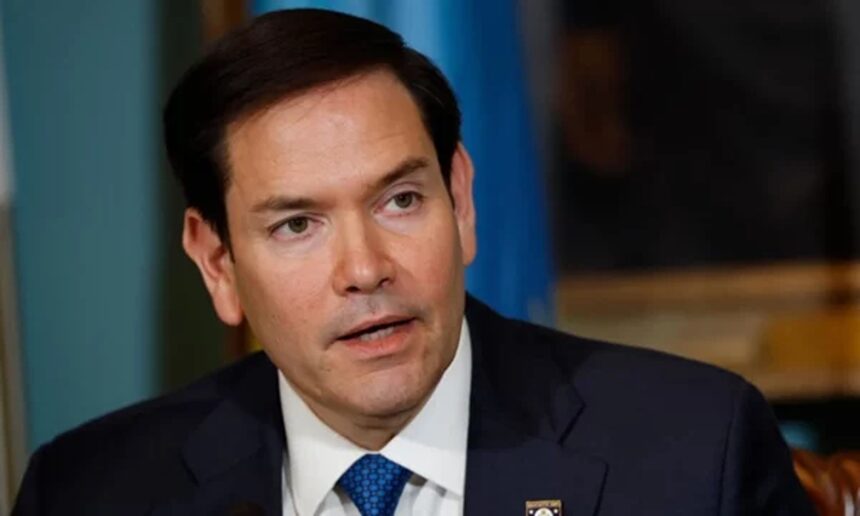
U.S. Secretary of State Marco Rubio is visiting NATO allies in Iceland, Greece and Portugal from October 5 to 8, with security, defense, energy, economic cooperation and technology expected to dominate discussions as concerns grow over Russian military activity and continued instability in the Middle East.
Rubio’s tour begins in Reykjavik, where he is expected to discuss Arctic security and economic cooperation with Icelandic officials.
He will then travel to Athens for the sixth U.S.-Greece Strategic Dialogue, with defense cooperation, energy, regional security, Ukraine and the Middle East expected to be among the main topics.
In Lisbon, talks will focus on defense, economic development and technological cooperation, according to the U.S. State Department.
The three stops highlight different dimensions of Washington’s cooperation with its NATO allies, from Iceland’s strategic position in the North Atlantic and Arctic to Greece’s role in the eastern Mediterranean and Portugal’s longstanding importance to U.S. military operations in the Atlantic.
Iceland: Security and the Arctic
Iceland has no standing army but has long cooperated with the United States and NATO on security issues because of its strategic location in the North Atlantic.
Two former U.S. ambassadors to Iceland told Radio Free Europe, speaking on condition of anonymity, that Reykjavik is likely to remain open to closer security cooperation while also seeking to ensure that its concerns and strong tradition of political independence are taken into account.
Robert Gerber, a former U.S. diplomat who served at the U.S. Embassy in Iceland, said Rubio’s visit could build on commitments discussed during a September meeting of Arctic states on the sidelines of the United Nations General Assembly.
Those discussions included calls for Arctic partners to assume greater responsibility for their own security and the protection of critical infrastructure.
Gerber pointed to Russian military activity as one of the security challenges facing the region, recalling incidents in which Russian aircraft or bombers approached Icelandic airspace and returned after testing how quickly NATO could respond.
He also highlighted concerns over submarine activity and the protection of undersea telecommunications cables linking North America and Europe.
Iceland hosts the Keflavik air base, has supported Ukraine and contributes to maritime operations and search-and-rescue efforts through its Coast Guard.
Gerber said Iceland’s Coast Guard, including its vessels and helicopters, could play an important role in responding to a potential Arctic crisis.
He did not expect Rubio to persuade Iceland to significantly increase defense spending, noting the relatively small size of the Icelandic economy and the country’s strong tradition of political independence.
Eric Green, a former White House National Security Council official and former deputy chief of mission in Iceland, said Icelandic officials would likely seek additional assurances from Washington during Rubio’s visit.
He said Reykjavik would also welcome indications that Washington intends to provide greater support to Ukraine and European allies as Russia’s war continues.
The Arctic has meanwhile become an area of increasing strategic competition as melting ice opens new maritime routes and raises interest in the region’s natural resources. Former U.S. diplomats cited by RFE/RL also pointed to Russia’s strengthened military presence along its Arctic coast and China’s efforts to expand its influence through port, research and other projects.
Greece: Defense, Energy and Regional Security
In Athens, Rubio will lead the U.S. delegation at the sixth U.S.-Greece Strategic Dialogue, scheduled for October 6 and 7.
Established in 2018, the dialogue provides a framework for cooperation on defense, energy and other issues. Discussions are expected to cover military facilities and Greek support under the U.S.-Greece Mutual Defense Cooperation Agreement, as well as developments in Ukraine and the Middle East.
Geoffrey Pyatt, a former U.S. assistant secretary of state for energy resources and former ambassador to Greece and Ukraine, said the strategic dialogue was established to strengthen bilateral cooperation independently of other regional relationships.
He said military cooperation, energy opportunities and people-to-people ties, including education and investment, have remained priorities regardless of whether Republicans or Democrats are in power in Washington.
Pyatt also highlighted Greece’s commitment to its European and transatlantic partnerships.
Portugal: Defense and Technology
Rubio’s final stop will be Lisbon, where, according to the State Department, he will discuss defense, economic development and technological cooperation with Portuguese leaders.
Portugal’s security cooperation with the United States includes the Azores, where Lajes Air Base has long served as an important logistical and refueling point for U.S. military operations in the Atlantic.
Rubio’s tour comes as NATO allies continue to assess security challenges posed by Russia while also dealing with the wider consequences of instability in the Middle East.