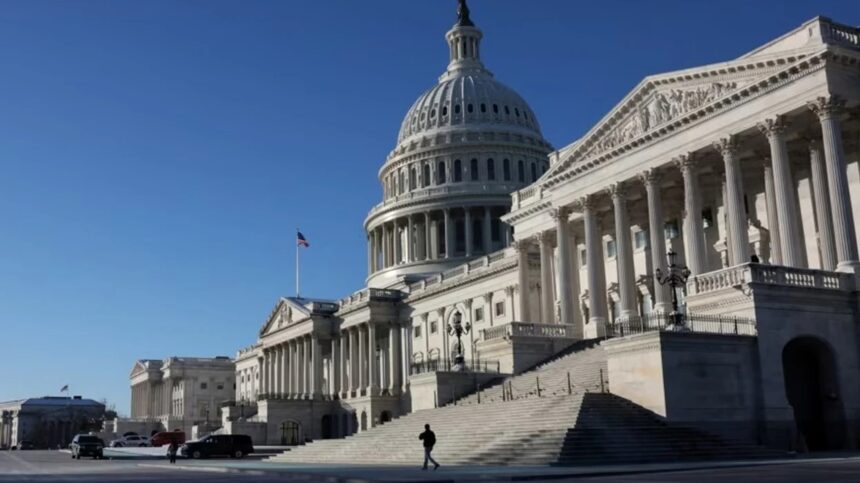
The draft concerning Serbia, drafted by senators from both major U.S. political parties, has been introduced in the U.S. Senate for consideration.
Among other objectives, the initiative seeks to support the rule of law and the independent functioning of institutions.
The draft was jointly introduced by Republican Senator Chuck Grassley and Democratic Senator Richard Blumenthal.
The Senate website shows that the draftl has entered the legislative process, while its full text has not yet been published.
For a draft to become law in the United States, it must first pass both chambers of Congress—the Senate and the House of Representatives—and then be signed by the U.S. president, Donald Trump.
At the end of August, a Serbia-related draft was introduced in the House of Representatives by Republican Congressman Joe Wilson, who has repeatedly criticized Serbian authorities in recent months, and Democrat Bill Keating.
“I am grateful to Senators Grassley and Blumenthal for introducing the ‘Serbia’ draft in the Senate. The regime of (Aleksandar) Vučić is fighting with all its might to remain in power. Elections in Serbia must be free and fair,” Wilson wrote on X.
The draft introduced by Wilson and Keating proposes that the United States impose financial sanctions and visa restrictions on actors who contribute to destabilizing the Western Balkans, as well as on individuals who threaten the peace, security, stability, or territorial integrity of any area or state in the region.
The document states that there has been “serious democratic backsliding” in Serbia, also referring to the European Parliament’s 2025 report on Serbia.
It also proposes that the United States suspend its strategic dialogue with Serbia if issues related to free and fair elections, as well as Belgrade’s relations with Beijing and Moscow, are not addressed during those talks.
If the U.S. Department of State were to fail to take these steps, the draft states that Congress—which has authority over the federal budget—should withhold funding for the department’s operations.