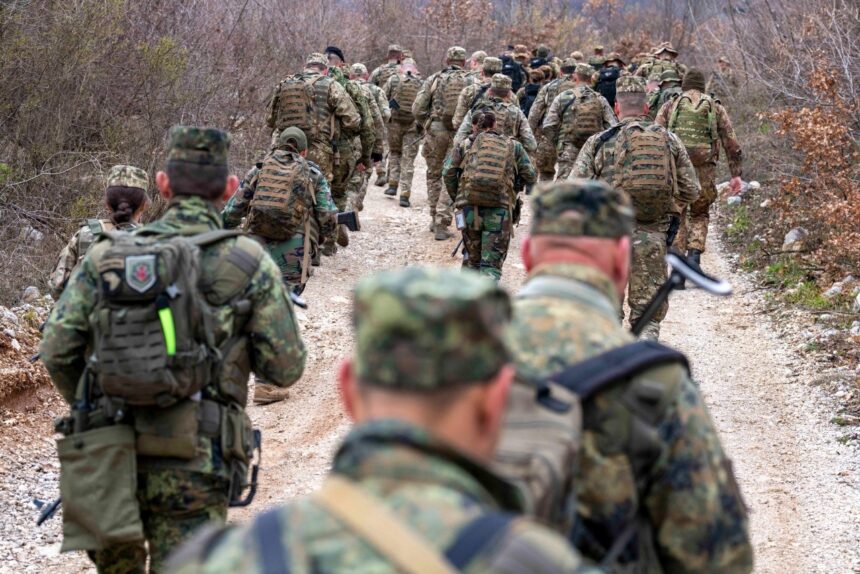
In a clear message of regional stabilization, the Slovenian Ministry of Defense officially announced today that it has zero immediate plans to scale back its military presence within NATO’s KFOR (Kosovo Force) peacekeeping mission.
The strategic declaration directly highlights Slovenia’s ongoing commitment to preserving a safe and secure environment in the Western Balkans during a period of complex regional geopolitical friction.
1. The Military Footprint: Precision Over Scale
According to official data released by Ljubljana, the Slovenian Armed Forces currently maintain a highly specialized, active deployment of 106 personnel embedded within the international KFOR framework.
The Architecture of Slovenia's KFOR Mandate

 [ THE PERMANENT STANCE ] ──► NO REDUCTION PLAN
 • Defense officials explicitly dismissed rumors of an imminent drawdown,
   solidifying their operational lines in Kosovo for the foreseeable future.

 [ THE CRITERIA FOR SHIFTS ] ──► COMPREHENSIVE ASSESSMENT
 • Any future adjustment to Slovenian military numbers will depend strictly
   on a holistic review of theater dynamics and NATO mission requirements.

 [ THE TACTICAL SYNERGY ] ──► CAPACITY ALIGNMENT
 • Ljubljana balances its localized domestic defense capacities with its
   transatlantic obligations to prevent vacuum zones in Balkan security.
2. The Strategic Context of the Deployment
Slovenia’s decision to maintain its full military contingent comes at a critical time for European security, as NATO reassesses its defensive postures along its southern flank.
Why the 106-Troop Presence Matters
┌────────────────────────────────────────────────────────────────────────┐
│                                                                        │
│  [ DISCOURAGING EXTERNAL MEDDLING ] ───────────────────────────────┐   │
│  • A stable, visible KFOR presence serves as a direct deterrent       │   │
│    against asymmetric hybrid threats and cross-border provocations.     │   │
│                                                                        │   │
│  [ LOCALIZED HISTORICAL EXPERTISE ] ───────────────────────────────┤   │
│  • As a former Yugoslav republic, Slovenia provides invaluable regional │   │
│    linguistic and cultural intelligence to the broader alliance force. │   │
│                                                                        │   │
│  [ REAFFIRMING ALLIANCE RELIABILITY ] ─────────────────────────────┘   │
│  • By maintaining commitments, Ljubljana bolsters its political       │
│    standing in Brussels and highlights intra-alliance burden sharing.   │
└────────────────────────────────────────────────────────────────────────┘
“Any decision regarding possible adjustments to the future engagement of the Slovenian Armed Forces in KFOR will be made following a comprehensive assessment, taking into account the needs of the mission and our capacities.”
— Slovenian Ministry of Defense (via STA)
3. The Regional Security Matrix
The decision by the Slovenian Defense Ministry mirrors an overall trend among EU and NATO members to reinforce—or at least stabilize—the peacekeeping mission in Kosovo to prevent any resurgence of historic regional hostilities.
| Force Contributor | Current Operational Priority in Kosovo | Strategic Significance |
| Slovenia | Maintaining 106 tactical personnel with a focus on regional intelligence and stability operations. | Secures steady continuity and prevents rapid troop shortages in key monitoring sectors. |
| NATO / KFOR | Implementing flexible response capabilities to protect minority enclaves and border lines. | Ensures the overarching mandate of a safe and secure environment is strictly upheld. |
| Western Balkans | Navigating delicate political transitions, EU integration talks, and external hybrid pressures. | Highly reliant on international military neutral buffers to de-escalate political friction. |
By explicitly tying any future troop movements to rigid, evidence-based threat assessments rather than arbitrary political timelines, Slovenia has firmly signaled to its regional partners that its role as a security anchor in Kosovo remains entirely uninterrupted.